The Story
Why it exists.
The beginning
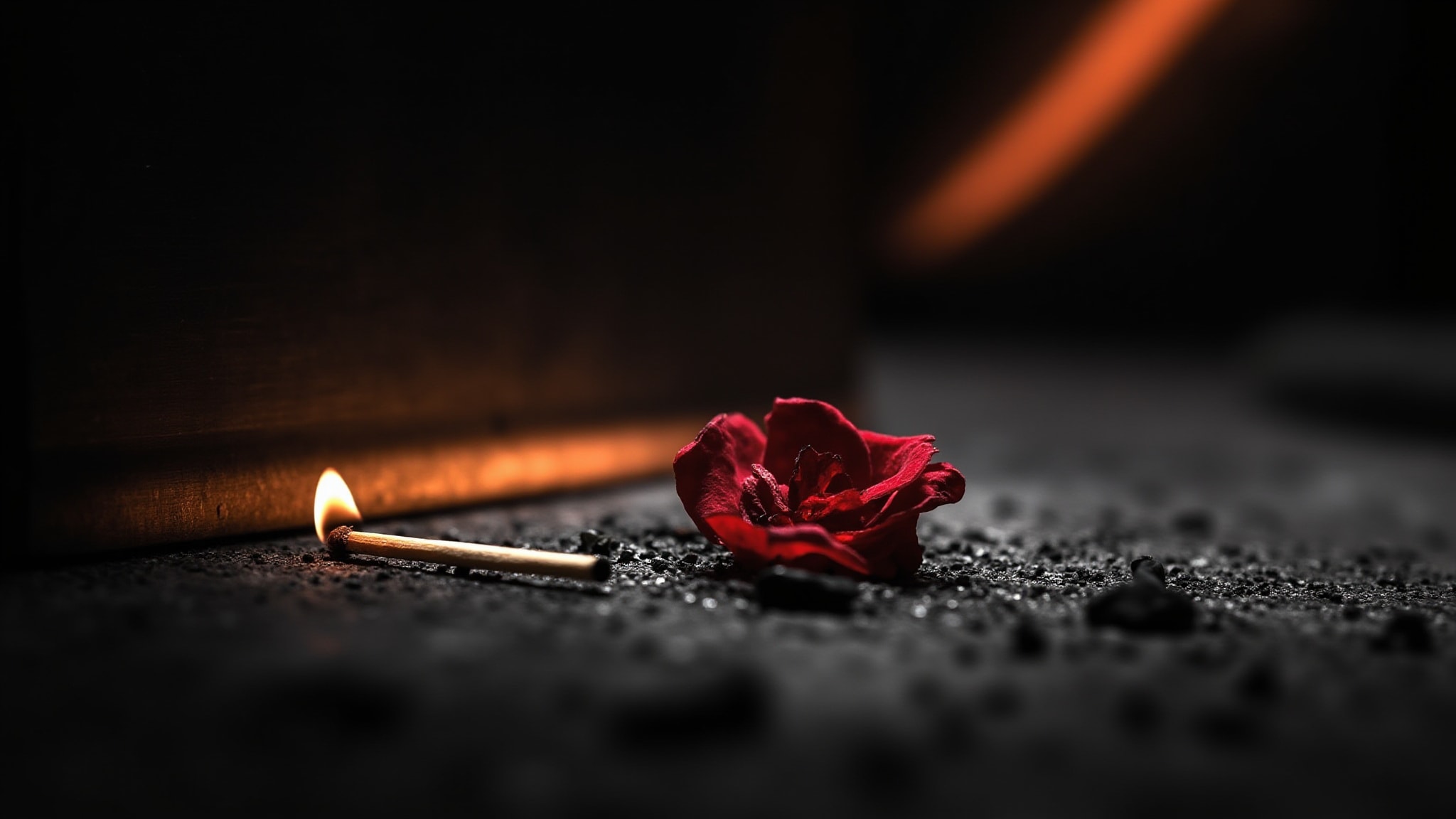
Smolderose began in a Pawtucket studio, an experiment in what happens when a familiar material meets an unexpected process. The name is literal: roses, heat, and the precise moment where one becomes something else entirely. There is no destruction here, only transformation. What emerges bears no resemblance to what went in. The parfum oil from 2015 marked the first tangible result of that questioning, a working perfume that asked whether scent could be its own kind of description.
The heart of Smolderose is Bourbon rose absolute, which carries more wax and honey than its Damask cousin, less romantic, more material. That rose sits inside smoke and birch tar from the start, not arriving later to soften anything. Castoreum adds animal depth that reads as skin-warmth rather than skank, and blond tobacco leaf stays throughout, never quite fading. The combination means the rose never becomes precious. It earned something.
The evolution
The opening arrives bright and tart, lemongrass cutting through like a struck match in a quiet kitchen. Mandarin orange follows, brief and sweet, a quick flash before the composition shifts. Within minutes the rose absolute moves in, not a shy arrival but a confident presence arriving alongside smoke that is already building beneath. Rose geranium keeps the rose grounded in green, while black pepper introduces a dry heat that resists any softness. Galbanum brings something almost mineral, an unexpected tension that prevents the composition from settling into easy warmth. As the heart develops, the smoky core intensifies, the two forces working through their friction in real time. Birch tar and oud anchor the base, smoke not as vague incense but as actual combustion, the smell of something burning rather than smoldering. Labdanum adds resinous warmth that persists.
Cultural impact
Smolderose occupies a particular space in indie perfumery, part of a broader conversation around smoky rose compositions. What distinguishes it is the structural choice to place birch tar and castoreum at the foundation rather than as a late-stage reveal, affecting how the fragrance develops and how the rose material integrates with the darker elements from the start. For those who find traditional rose compositions too softened for their taste, this offers an alternative that presents itself without apology.