
The Story
Why it exists.
The beginning
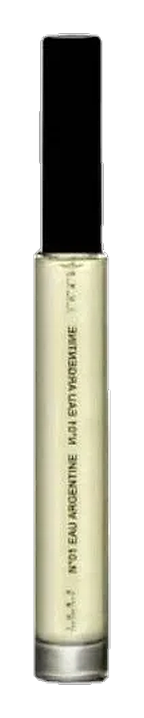
Named after Argentina's iconic mate tea, N 01 Eau Argentine was born in 2003 as the first drop of IUNX's water-inspired series. Perfumer Olivia Giacobetti captured the ritual of a sunrise brew, using mate as the central accord and supporting it with rice, a staple of South-American meals. The inclusion of woody notes reflects the natural setting of mate consumption, while hemp adds an unexpected layer of green depth that rounds the composition into something cohesive and quietly distinctive.
The choice of mate as the central note reflects a commitment to authenticity over convention. Rather than relying on familiar citrus or floral openings, the composition begins with the leaf itself, embracing its bitter, herbaceous character. Woody notes provide natural warmth, rice adds the comforting starchy quality of a staple ingredient, and hemp contributes a quiet depth that prevents the scent from feeling one-dimensional. The result is a fragrance that smells like an experience rather than a formula.
The evolution
The scent moves directly into its heart, where mate leaf asserts its bitter-green presence immediately. Woody notes arrive alongside, adding warmth without sweetness. Rice weaves through the composition, providing a subtle starchy counterpoint that softens the herb's edge, while hemp grounds the entire structure with a quiet resinous quality. As time passes, the mate recedes first, followed by the woody elements, leaving only a faint trace of rice and hemp that sits close to the skin.
Cultural impact
When N°01 Eau Argentine debuted in 2003, it arrived at a moment when minimalist design and elemental storytelling were gaining traction in the perfume world. IUNX’s focus on a single botanical note, Mate, reflected a broader cultural shift toward authenticity and sustainability, resonating with consumers seeking transparency in ingredients. The fragrance’s subtle green‑woody profile echoed the growing interest in South American tea cultures, while its unisex appeal aligned with the early‑2000s move toward gender‑fluid scent experiences. Over the years, the perfume has been cited in niche community discussions as a benchmark for minimalist composition, influencing subsequent releases that prioritize a clear, singular theme rather than complex accords.