The Story
Why it exists.
The beginning
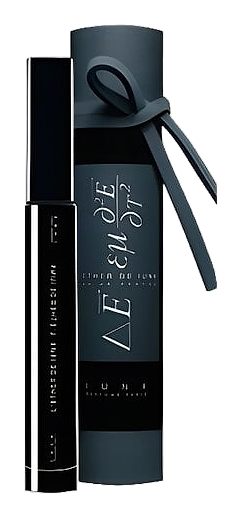
L'Ether arrived in 2003 from Olivia Giacobetti, arriving not as part of IUNX's numbered L'Eau series but as something slightly apart, a fragrance named for the luminous substance beyond air. Where the L'Eau line captured water in its various states, L'Ether reached higher, into classical philosophy's fifth element: pure essence, formless and luminous. Giacobetti, known for her work at IUNX, Olfy, and L'Artisan Parfumeur, understood that an idea named for the delicate could still be built from the deeply tactile. She reached for resins and aromatic materials with weight and presence, the opposite of weightlessness. Her palette drew from ancient perfumery traditions while maintaining a contemporary sensibility, creating something that felt both timeless and distinctly modern.
The choice of Palisander rosewood as a structural element is unusual. Less common than its Brazilian cousin, it brings a drier, almost medicinal woodiness that reads differently from cedar or guaiac, more angular, more honest. Paired with the balsamic sweetness of benzoin, the composition threads between sacred and domestic. Saffron, present in small amounts, adds a metallic counterpoint that keeps the sweetness from ever becoming soft. Maple, an unexpected note in an oriental context, provides a subtle caramel warmth that emerges only as the fragrance settles.
The evolution
The opening announces rosewood's dry warmth and saffron's metallic brightness in quick succession. Within minutes, myrrh and benzoin arrive, balsamic, slightly sweet, the scent of resin before it catches flame. The transition is not dramatic. The composition deepens gradually, building complexity without announcement. By the third hour, sandalwood has taken over the foreground, creamy and warm, while the resinous warmth lingers in the background like a memory of the opening. The drydown is quiet: skin-warm wood and a trace of benzoin sweetness. On fabric, the rosewood note remains for days, a persistent reminder of the fragrance's presence.
Cultural impact
L'Ether exists in a particular corner of fragrance history, discontinued, hard to find, but remembered with quiet intensity by those who wore it. It sits alongside IUNX's broader project of elemental purism, translating philosophical concepts into olfactory form. For collectors, it represents both a rarity and an example of Giacobetti's ability to build compositions that feel simultaneously conceptual and deeply wearable. The oriental genre it occupies is less dramatic than many of its contemporaries, more contemplative, requiring patience from both wearer and observer.