
The Story
Why it exists.
The beginning
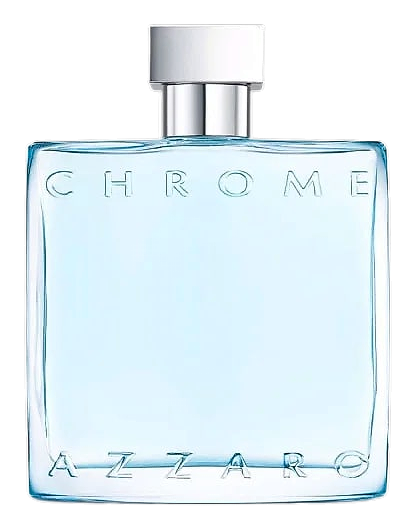
Chrome arrived in 1996 from Azzaro, the house of Mediterranean boldness and unapologetic seduction. But this wasn't that. Perfumer Gerard Haury built something that went against the brand's DNA, a fragrance for the man who wins without making a scene. The name said it all: chrome, the polished metal of engines and chrome, surfaces that reflect rather than radiate. It was cool in the truest sense of the word, untouchable and composed. Azzaro had built its legacy on desire and heat. Chrome was the exception that proved the rule, that sometimes the most interesting thing in the room is the thing that never tried to be.
What makes Chrome interesting isn't what it does. It's what it doesn't do. The aquatic accord never drowns, the citrus never screams, the musk never prowls. Instead, every element pulls back. The ginger adds a clean heat that could cut through the sterility of an air-conditioned office. The hedione lifts without projecting. The star anise lingers in the drydown like a memory of something spice-adjacent, never quite arriving. It's a study in restraint, each note aware of the others, each one stepping back so the composition can hold together. That's not nothing. It's actually quite hard to pull off.
The evolution
Chrome opens bright and citrus-forward, the bergamot and grapefruit arriving clean and metallic at once, like peeling an orange in a new car. The ginger adds a subtle heat underneath, a warmth that keeps the citrus from feeling like window cleaner. Within twenty minutes, the aquatic note moves in, and the composition shifts from fruit to something that smells like the inside of a stainless steel water bottle left in the sun. Not unpleasant. Just specific. The heart develops quietly, the musk and hedione arriving without fanfare, adding a skin-like warmth that stays close. The star anise doesn't announce itself, it hovers at the edge, adding an almost licorice-like depth that most people won't catch unless they're looking. By hour three, Chrome has settled into its base. The amber and mate create a quiet, almost dusty warmth. The lichen adds a mineral edge that keeps everything feeling clean, clinical. The woody notes don't project, they just hold. Chrome doesn't evolve dramatically.
Cultural impact
Chrome became the fragrance of the office, the commute, the boardroom. Wearers describe it as the scent of someone who walks into a room and doesn't need to announce themselves. It's been called the official scent of formal workplaces, not a insult, but a purpose. Chrome sits alongside CK One in the canon of fresh, aquatic fragrances that became workplace staples in the late 90s and early 2000s. It's not trying to be remembered. It's trying to be trusted.