
The Story
Why it exists.
The beginning
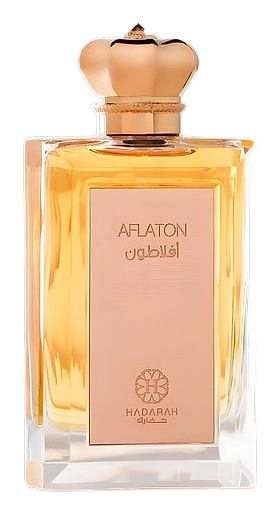
Aflaton debuted in 2015 as a unisex fragrance from Hadarah Perfumes. Its name points toward Plato, the Athenian philosopher associated with the Academy and Western thought. Hadarah framed the fragrance around that classical inheritance: an atmosphere of reasoned beauty carried through rose, cardamom, patchouli, cedarwood and sandalwood. Rather than translating Greek culture literally, the composition works through atmosphere. Floral softness meets aromatic spice, while patchouli and cedar introduce weight and a measured, contemplative edge. The rose opens the accord with a bright, polished quality, tempered by the dry heat of cardamom.
The striking part is the tension between rose and patchouli. Rose gives the composition brightness and polish, yet patchouli pulls it toward damp soil, resin and something darker. Cardamom keeps the opening animated, stopping the rose from becoming conventionally pretty, while cedar and sandalwood turn the result architectural. The structure is restrained and deliberate, arranged as three distinct layers: rose and cardamom at the top, patchouli and cedar at the heart, and sandalwood in the base.
The evolution
The opening arrives with rose and cardamom, close and aromatic, like petals rubbed with spice rather than laid beside it. The floral side brightens first, giving the scent an almost polished surface. As the heart develops, patchouli and cedar take over. The rose remains, but it gains weight and becomes less decorative. This is the most distinctive phase, a meeting of floral warmth and earthy depth that can feel unexpectedly grounding. The patchouli brings a cool, soil-like density, while cedar draws a clean, dry line through the composition. In the drydown, sandalwood smooths the sharper edges while preserving a warm trail. The rose recedes toward a faint blush, the cardamom fades to a whisper of spice, and the final impression settles closer to soft suede and aromatic wood than to fresh petals.
Cultural impact
Aflaton takes its name from Plato, the Athenian philosopher associated with the Academy and Western thought, and wears that classical reference as an atmosphere rather than a literal costume. The name arrives through rose, spice and wood, a combination that gives the scent a contemplative, studious character without borrowing any visible motif from antiquity. In the composition itself, the classical mood appears as composure: a polished floral opening, an earthy heart of patchouli and cedar, and a sandalwood base that settles the whole accord into quiet, suede-like warmth.