
The Story
Why it exists.
The beginning
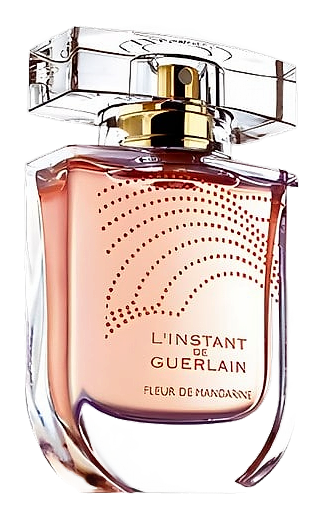
Maurice Roucel created L'Instant de Guerlain Fleur de Mandarine in 2007 as part of Guerlain's L'Instant collection. The brief was simple: translate emotional intensity into scent. What arrived was a fragrance that opens with a citrus brightness sharp enough to catch attention, then softens into something far more intimate. The mandarin blossom, not just mandarin, but the actual flower, anchors the heart. It's a note that carries both the brightness of the fruit and a deeper, more nuanced warmth. The tension between these qualities is where the fragrance lives. This isn't a fragrance about projection or presence. It's about proximity. The kind of scent someone notices only when you're close enough to matter.
The note structure reveals a deliberate asymmetry. Mandarin and bitter orange open sharp, almost confrontational, a jolt of citrus that announces itself. But the heart layers in mandarin blossom alongside magnolia and blackcurrant, which carry a softer, more textured quality. Hyacinth adds a slight green edge that keeps the florals from reading as sweet. The base, vanilla, cedar, musk, never fully takes over. It simply settles. The composition works because Roucel refuses to let any single phase win. The brightness doesn't disappear; it transforms into warmth. That's the trick of a good solar fragrance: it earns its warmth by not starting warm.
The evolution
The opening hits first, a sharp, luminous burst of mandarin and bitter orange sharpened by bergamot. It reads cool, almost crisp. Thirty minutes in, the florals begin their work. Mandarin blossom and magnolia push through, with blackcurrant adding a faint tartness that keeps the sweetness honest. This is the heart of the fragrance, where the warmth lives. The citrus doesn't vanish; it absorbs into the florals, becoming part of the warmth rather than contrasting with it. By the third hour, the drydown arrives. Vanilla and cedar settle close to the skin. The musk threads through, adding a skin-like quality that makes the fragrance feel intimate rather than projected. This is not a fragrance that announces itself from across the room. It's the kind that someone notices only when they're close enough to matter.
Cultural impact
L'Instant de Guerlain Fleur de Mandarine occupies a specific corner of Guerlain's archive: a solar floral that resists the trend toward heavy orientals. Released in 2007 alongside the original L'Instant, it offers something different, a warmth that doesn't demand attention. The fragrance has maintained a loyal following among those who appreciate its particular balance, the way it holds brightness and intimacy in the same breath.
The House
GuerlainGuerlain stands as one of the oldest and most revered perfume houses in the world, founded in Paris in 1828 by Pierre-François-Pascal Guerlain. What began as a boutique on rue de Rivoli quickly became the preferred destination for Parisian society, attracting dandies and elegant women who sought custom-crafted fragrances. The house's influence grew to such heights that Guerlain earned the title of Official Perfumer to Napoleon III after presenting Eau de Cologne Impériale to Empress Eugénie as a wedding gift in 1853. This royal patronage marked the beginning of Guerlain's enduring association with European aristocracy, as the house went on to create fragrances for Queen Victoria and Queen Isabella II of Spain. Today, under the creative direction of Thierry Wasser, the fifth-generation perfumer, Guerlain continues to shape the landscape of fine fragrance with a portfolio spanning over 1,100 olfactory creations. The house remains headquartered at its legendary Champs-Élysées mansion, a historic monument that anchors Guerlain's position at the intersection of heritage and contemporary luxury.
The Creator
Maurice RoucelRoucel's style is often described as opulent and sensual. He has a penchant for white flowers, particularly tuberose, which he often uses in rich, heady compositions.