The Story
Why it exists.
The beginning
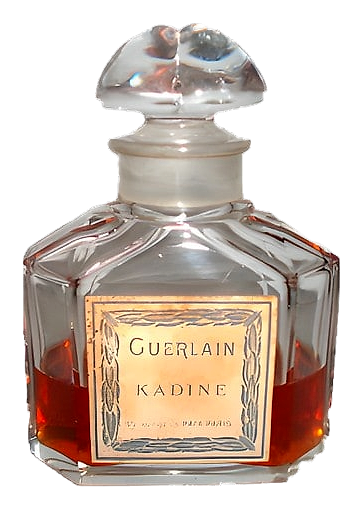
Kadine arrived in 1911 from Jacques Guerlain. The name itself carries weight, Kadine, evoking a sense of femininity and grace that feels both timeless and contemporary. The anise opening was bold enough to announce arrival but complex enough to invite a second look. There is an herbal sharpness to the beginning, almost medicinal in its clarity, that sets this fragrance apart from more conventional choices. By 1911, Guerlain had built a clientele that expected not just quality but distinction. Kadine was created for those who sought something beyond the ordinary. The composition reveals a careful balance of unexpected elements, each layer building on the last to create something memorable.
The combination of anise and bergamot in the opening is unusual. Anise brings an herbal, almost medicinal sharpness that most perfumers avoid, preferring the safety of citrus. Bergamot adds a bright citrus counterpoint to the opening. The heart is where Guerlain's mastery shows: heliotrope and jasmine provide the floral character, with cloves and cassia bourbon adding warmth that borders on edible. The base features violet leaf, iris, and vanilla in classic Guerlain style, creating a powdery-floral character that lingers on the skin.
The evolution
Anise hits first. Bright, almost green, the kind of sharpness that could cut through a stuffy room. Bergamot follows, bringing a citrus brightness that tempers the anise without replacing it. As time passes, heliotrope emerges, that powdered, slightly almond sweetness that changes the conversation entirely. The cloves and cinnamon build quietly in the background, adding warmth without heat. As the fragrance develops, jasmine appears, soft and round, connecting the sharp opening to the powdery heart. The drydown is where Kadine truly unfolds: violet leaf and iris create a powdery violet note, with vanilla providing a gentle sweetness that never overwhelms. The progression moves from sharp to soft, from assertive to intimate, with each stage revealing something new about the composition. What begins as a bold statement settles into something refined and lasting.
Cultural impact
Kadine has been part of the Guerlain catalog since 1911. The original formula is preserved in the Hall of Mirrors at Maison Guerlain, a testament to its status within the house. Unlike Guerlain's more famous releases, Kadine never became a blockbuster, but it remains a fragrance that rewards those who seek it out. It occupies a particular space: old enough to be historic, distinctive enough to remain relevant. There is something about this scent that transcends trends and seasons, a quality that makes it stand apart from more transient offerings.
The House
GuerlainGuerlain stands as one of the oldest and most revered perfume houses in the world, founded in Paris in 1828 by Pierre-François-Pascal Guerlain. What began as a boutique on rue de Rivoli quickly became the preferred destination for Parisian society, attracting dandies and elegant women who sought custom-crafted fragrances. The house's influence grew to such heights that Guerlain earned the title of Official Perfumer to Napoleon III after presenting Eau de Cologne Impériale to Empress Eugénie as a wedding gift in 1853. This royal patronage marked the beginning of Guerlain's enduring association with European aristocracy, as the house went on to create fragrances for Queen Victoria and Queen Isabella II of Spain. Today, under the creative direction of Thierry Wasser, the fifth-generation perfumer, Guerlain continues to shape the landscape of fine fragrance with a portfolio spanning over 1,100 olfactory creations. The house remains headquartered at its legendary Champs-Élysées mansion, a historic monument that anchors Guerlain's position at the intersection of heritage and contemporary luxury.
The Creator
Jacques GuerlainJacques was among the first perfumers to work seriously with synthetic ingredients alongside naturals, publishing on essential oils with chemist Justin Dupont and experimenting with perfuming ink. His technical approach was precise: volume measurements for liquids, careful wei…