
The Story
Why it exists.
The beginning
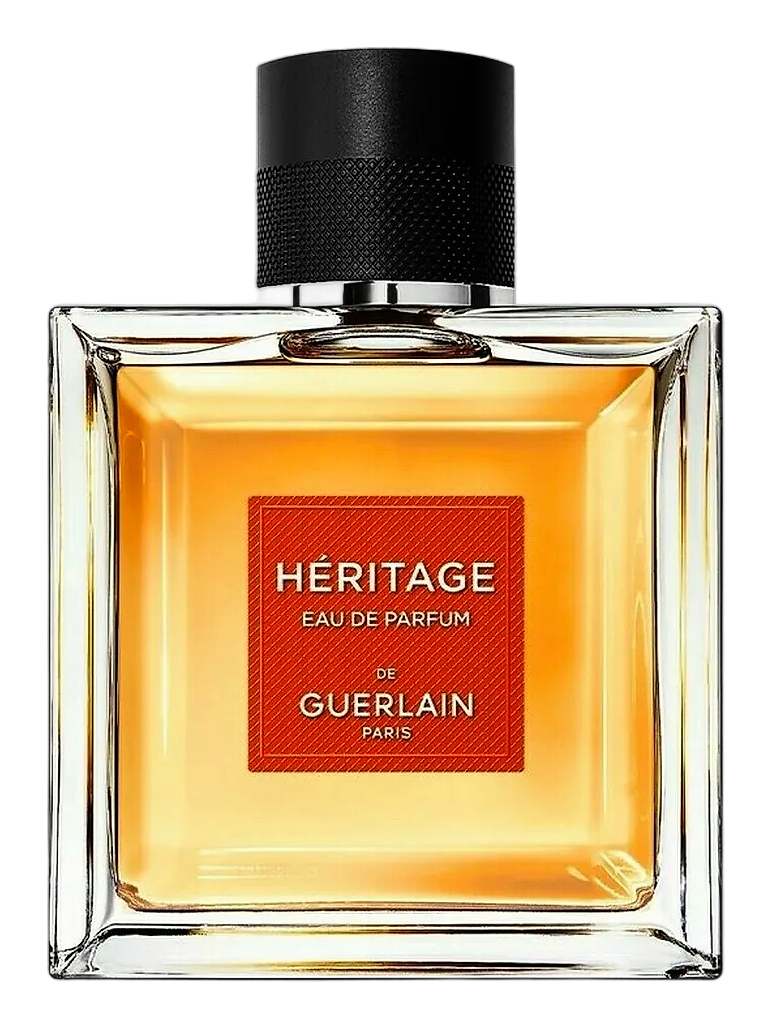
Guerlain has been crafting men's fragrances since the 19th century, when Parisian society first learned what a heritage scent could smell like. The house built its name on precision and elegance, something Jean-Paul Guerlain carried into the 1992 relaunch of Heritage. A fragrance named Heritage does not chase what is new. It defines what endures. Jean-Paul Guerlain designed it as a declaration for the men of tomorrow, rooted in the knowledge that true style does not expire.
The note structure in Heritage is deliberate. Lavender provides the aromatic backbone, bergamot and lemon add brightness without sweetness, and coriander introduces complexity that rewards patience. Pink pepper bridges the transition to the base, ensuring warmth arrives before earthiness. Patchouli closes the composition with the kind of quiet authority that Guerlain has always valued over noise. There is no excess here. Every note earns its place.
The evolution
Heritage opens with lavender softened by bergamot and lemon, a combination that feels both immediate and disciplined. As the initial brightness settles, coriander weaves into the composition with its quietly spicy, green character, while pink pepper adds a gentle warmth that keeps the heart from becoming heavy. The progression is not dramatic. It is a slow, considered shift from light to depth. By the time patchouli arrives in the drydown, the fragrance has already made its case. Patchouli lingers with earthy persistence, the kind of base that leaves a room before you do.
Cultural impact
Heritage arrived in 1992 as a men's fragrance from Guerlain, a house rooted in 19th-century perfumery tradition. The aldehydic structure in the opening draws on a classical perfumery technique, while the lavender and woody drydown anchor the fragrance in that tradition. Heritage represents a contemporary release that doesn't abandon the house's sensibility but rather reinterprets it. Its continued production over decades speaks to resonance with buyers who wanted something built to last. The fragrance offers warmth and refinement, a patient presence that settles into the skin rather than demanding attention.
The House
GuerlainGuerlain stands as one of the oldest and most revered perfume houses in the world, founded in Paris in 1828 by Pierre-François-Pascal Guerlain. What began as a boutique on rue de Rivoli quickly became the preferred destination for Parisian society, attracting dandies and elegant women who sought custom-crafted fragrances. The house's influence grew to such heights that Guerlain earned the title of Official Perfumer to Napoleon III after presenting Eau de Cologne Impériale to Empress Eugénie as a wedding gift in 1853. This royal patronage marked the beginning of Guerlain's enduring association with European aristocracy, as the house went on to create fragrances for Queen Victoria and Queen Isabella II of Spain. Today, under the creative direction of Thierry Wasser, the fifth-generation perfumer, Guerlain continues to shape the landscape of fine fragrance with a portfolio spanning over 1,100 olfactory creations. The house remains headquartered at its legendary Champs-Élysées mansion, a historic monument that anchors Guerlain's position at the intersection of heritage and contemporary luxury.
The Creator
Jean-Paul GuerlainJean-Paul Guerlain's style resists easy categorization, though richness and depth define nearly every composition. He favored opulent oriental structures, warm woods and resins, and florals treated with almost sculptural precision.