
The Story
Why it exists.
The beginning
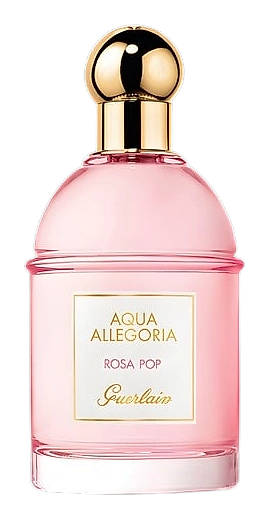
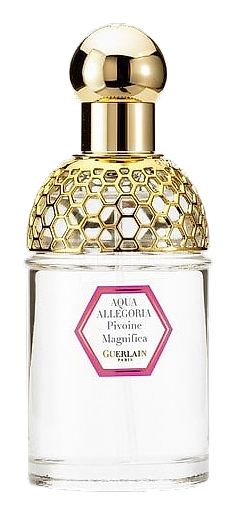
Karine Dubreuil-Sereni designed Pivoine Magnifica in 2005 as Guerlain's dedicated paean to the peony, a flower the house had circled for years but never placed at the center. The Aqua Allegoria line has always functioned as olfactory postcards from imaginary gardens, but this one arrived with a mandate: the peony would not share the stage. Dubreuil-Sereni built upward from a single floral vision, treating peony not as an accent note but as the entire architecture around which everything else was positioned. The name itself says it, Magnifica. Not a suggestion. A declaration.
What makes Pivoine Magnifica structurally unusual is the clarity of its intent. Most florals hedge their bets, a little rose here, a touch of lily there, in case the lead doesn't land on every skin. Dubreuil-Sereni stripped that caution. The top register opens with the crispness of violet leaf and the brightness of pink grapefruit, a citrus-floral greeting that prepares the nose without announcing itself as the main event. Then the peony arrives and claims the middle ground entirely. The base follows with iris, powdery, slightly rooty, and soft woody notes that prevent the whole thing from tipping into sweetness. The architecture is disciplined: lift, bloom, settle.
The evolution
The opening is immediate, a burst of violet and pink grapefruit that reads like crushed petals on a warm afternoon. The citrus doesn't linger. Within ten minutes the peony takes over, and this is where the fragrance earns its name. It doesn't hint at florals. It delivers them, full and round and present, the way peony actually smells when you lean into a full bloom. The transition to the drydown is gradual, almost gentle, iris emerges first, introducing a powdery dryness that softens the floral richness. Then the woody notes settle underneath, creating a base that stays close to the skin for the remaining hours. On fabric, it fades quietly after five or six hours. On skin, closer to seven or eight. The final impression is clean and powdery, the ghost of a bouquet, not the bouquet itself.
Cultural impact
The 2005 launch of Aqua Allegoria Pivoine Magnifica arrived during a period when Guerlain was expanding its accessible luxury fragrance collection, positioning the Aqua Allegoria line as an entry point into the house's olfactory universe. Peony as a dominant note was relatively uncommon in Western perfumery at the time, making this fragrance somewhat pioneering in its floral focus. The fragrance has maintained a quiet presence in Guerlain's lineup for nearly two decades, becoming a reference point for those seeking a refined, powdery floral without the intensity of more dramatic floral compositions. Its longevity speaks to a specific audience that values understated elegance over bold statement pieces.
The House
GuerlainGuerlain stands as one of the oldest and most revered perfume houses in the world, founded in Paris in 1828 by Pierre-François-Pascal Guerlain. What began as a boutique on rue de Rivoli quickly became the preferred destination for Parisian society, attracting dandies and elegant women who sought custom-crafted fragrances. The house's influence grew to such heights that Guerlain earned the title of Official Perfumer to Napoleon III after presenting Eau de Cologne Impériale to Empress Eugénie as a wedding gift in 1853. This royal patronage marked the beginning of Guerlain's enduring association with European aristocracy, as the house went on to create fragrances for Queen Victoria and Queen Isabella II of Spain. Today, under the creative direction of Thierry Wasser, the fifth-generation perfumer, Guerlain continues to shape the landscape of fine fragrance with a portfolio spanning over 1,100 olfactory creations. The house remains headquartered at its legendary Champs-Élysées mansion, a historic monument that anchors Guerlain's position at the intersection of heritage and contemporary luxury.
The Creator
Karine Dubreuil-SereniDubreuil-Sereni's portfolio spans an unusually wide territory, from fresh masculine orientals to luminous feminine florals. She demonstrates particular skill with masculine compositions, having created multiple flankers and variations across several houses.