The Story
Why it exists.
The beginning
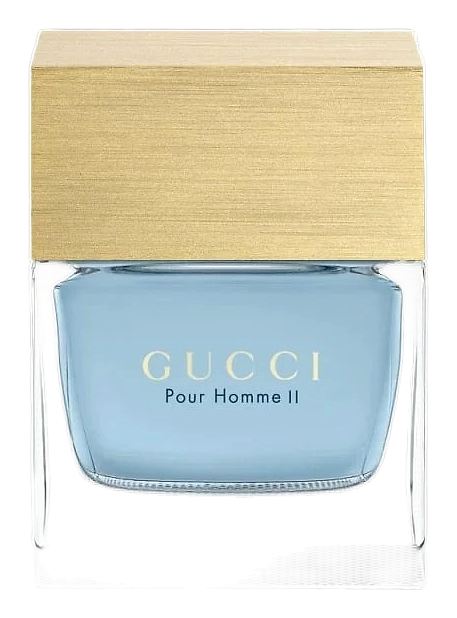
Gucci Pour Homme II arrived in 2007, shaped by perfumer Karine Dubreuil-Sereni into a spicy-woods composition. The opening moves through violet leaf and bergamot, giving way to black tea, cinnamon, and pimento, before the drydown settles into myrrh, tobacco, olive wood, and white musk. Karine built it as a study in warm restraint, a composition that lets each note do its job without crowding the others. There's a quiet confidence in the way the brighter topnotes yield to the deeper base, as if the whole thing were designed to feel settled from the first spray rather than building toward anything. The tobacco and olive wood anchor it, the white musk softens the edges, and the whole drydown reads like something worn in rather than something just applied.
What makes this composition interesting is the restraint baked into its warmth. Black tea stays tannic and unsweetened, leaning toward the brewed-leaf end of the spectrum rather than anything gourmand. Cinnamon comes through as a dry bark warmth, present but never cloying. Pimento in the heart is the unusual move, a dried pepper note that reads savory, offering a kind of aromatic bridge between the brighter citrus opening and the deeper base notes.
The evolution
The first ten minutes are all about violet leaf and bergamot, green and slightly bitter, the cool leafy side of the violet plant meeting a sharp, fleeting citrus. Then the black tea arrives, and the whole composition tilts warmer. Cinnamon starts low, almost polite, but it builds through the first hour, threading into the tea and softening both. By the two-hour mark the pimento has woven into the cinnamon, the bergamot has all but disappeared, and what remains is a warm spiced core that hovers just above the skin. Around the four-hour mark the tobacco surfaces, sweet-dry leaf, warm and a little leathery, with a softness that reads more like cured tobacco than anything smoked or burning. The olive wood shows up underneath it, giving structure, a faint green woodiness that keeps the whole thing from collapsing into pure sweetness.
Cultural impact
Gucci Pour Homme II occupies a specific corner of the early 2000s men's fragrance conversation, the moment when designers were beginning to soften their flankers and offer something more wearable alongside their louder original releases. The tobacco-and-tea pairing gave it an unusual shape, warm but not heavy, spiced but not sharp, the kind of composition that reads as grown-up without going formal.