
The Story
Why it exists.
The beginning
Cabotine Bleu arrived in 2003 as part of an expanding Cabotine collection, a flanker line that had already grown to enormous proportions. The scent opens with bright, clean notes that feel airy and light, then softens into a gentle floral heart before settling into something intimate and skin-close. The overall impression is of something breezier and less structured than one might expect from the family name.
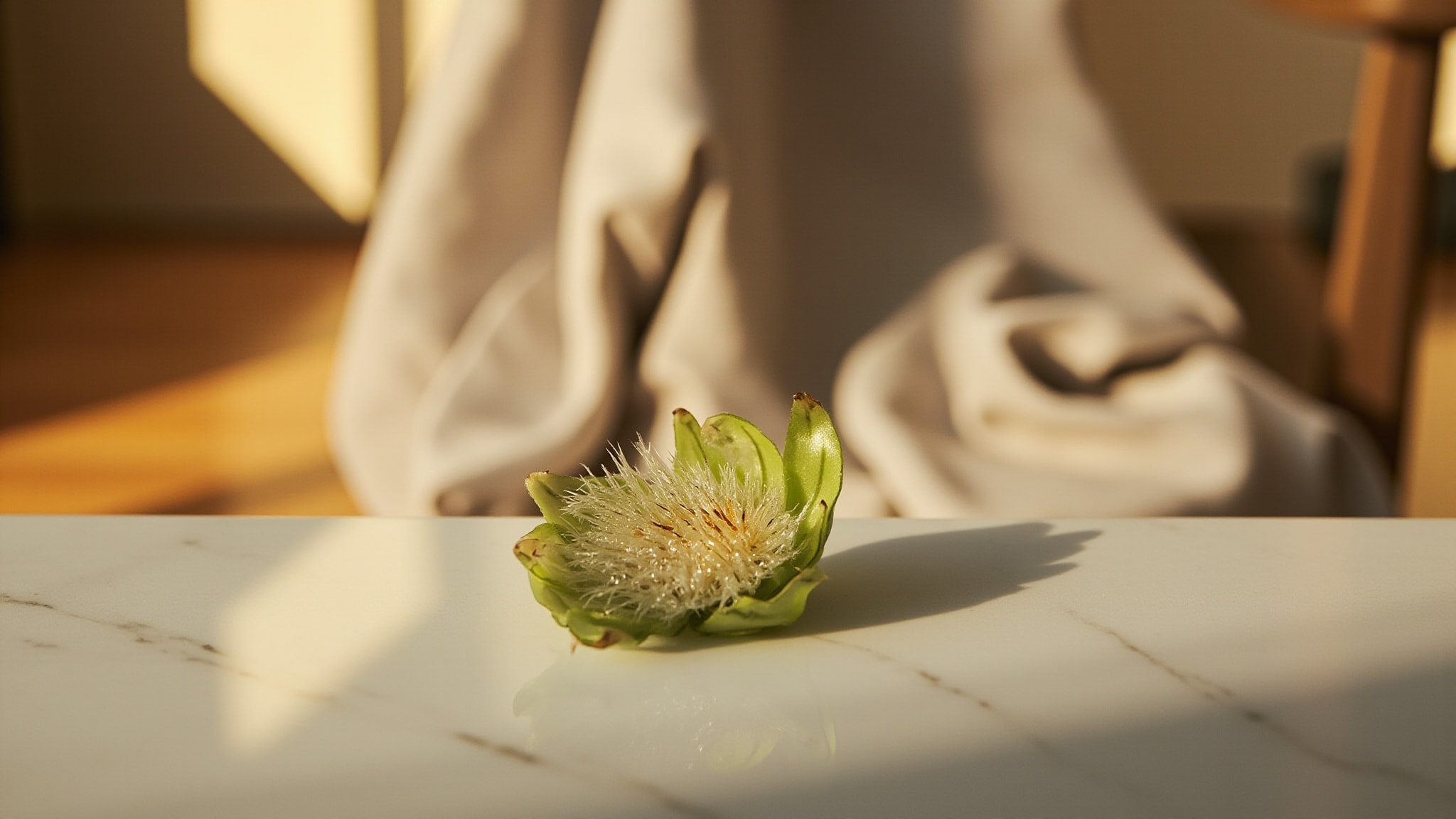
The cactus note is unusual. It is not green in the way galbanum is green, nor is it citrus. It is watery, like the inside of a succulent, or the air after a brief storm. When the lily of the valley and blue lotus arrive, they do not compete. They soften. The drydown is cotton and skin, the point where fragrance becomes memory rather than announcement. The combination of cotton flower with white musk creates something intentionally close. Vetiver grounds the composition, keeping it from becoming entirely delicate. This is not a fragrance that announces itself across a room.
The evolution
The opening is brief and bright. Cactus blossom reads almost transparent, a jolt of moisture before anything else arrives. Within minutes, the hibiscus extends that brightness, pushing it toward tropical territory. The transition is not dramatic. One moment the cactus is there, and then it isn't, replaced by something softer and more familiar. The heart arrives quietly. Lily of the valley and blue lotus share space, and neither dominates. There is a faint green thread from the coriander, not enough to startle, just enough to keep things interesting. The marigold adds a certain warmth, but it is warmth from a distance, warmth that does not push. The drydown belongs to white musk and cotton flower. This is where Cabotine Bleu earns its character: intimate, skin-close, barely there. By hour four, it reads more like memory than perfume. On fabric, it lingers slightly longer, a ghost of something fresh, there when you lean in, gone when you step back.
Cultural impact
Cabotine Bleu exists as part of a Cabotine collection that eventually grew to encompass more than twenty variants. The launch arrived during the era of light aquatic florals, though this interpretation sets itself apart through transparency rather than overt sweetness. Its moderate projection and daytime character suit those who prefer fragrance as subtle presence rather than statement. The composition remains understated throughout, appealing to those who want scent without spectacle.