
The Story
Why it exists.
The beginning
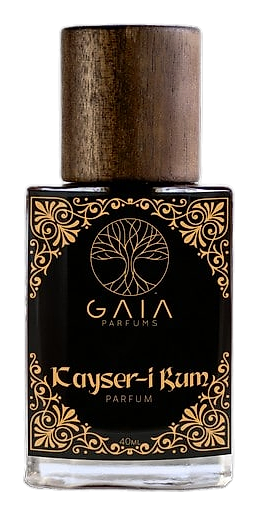
Anas Sabrani's composition looks east rather than west. The name gestures toward imperial grandeur while the juice itself stays intimate, grounded in materials that have perfumed the subcontinent for centuries. Cambodian oud, Damask rose, Indian jasmine, sandalwood. Sabrani built it the way the region has always worn scent: layered, resinous, unapologetic. There's a confidence in how the formula moves from the bright, jammy opening into the deeper, animalic drydown, never rushing, never apologizing for its weight. The oud doesn't announce itself with smoke or barnyard funk; it arrives like a slow tide, bringing with it the warmth of resin and the dry grit of bark. Jasmine threads through the heart with a green, almost metallic edge that keeps the rose from collapsing into sweetness.
What makes the structure worth noting is the civet. Most modern rose-oud compositions leave animalic notes out entirely, smoothing the genre into something approachable. Gaia pulled it back in. The civet sits beneath the rose, not on top of it, which means you smell it as warmth and skin before you ever identify it as animalic. Pair that with nagarmotha, an earthy Cypriol oil that's more common in Indian attars than Western niche perfumery, and the composition reads as a deliberate bridge between regional perfumery traditions and the extrait format. It's not a translation. It's the original language, bottled.
The evolution
The first ten minutes belong to the rose. Damask and Indian rose open together, jammy and slightly metallic, with the first green flicker of jasmine underneath. Not sharp, but alive. Around the thirty-minute mark, the Cambodian oud surfaces, woody and resinous but never smoky in the Middle-Eastern sense. It reads more like bark than like bakhoor. The civet arrives quietly around the same time, not as a hit but as a temperature change. The whole composition gets warmer, closer, more skin-like. By hour three, the sandalwood and patchouli have absorbed everything above them. What remains is a soft, dry, animalic warmth, the nagarmotha adding a dusty earthiness that clings to fabric long into the next day.
Cultural impact
Kayser-i Rum sits at an interesting crossroads for collectors: it's an extrait from a house most of the Western fragrance world hasn't heard of, but it carries a civet edge and a South Asian material vocabulary that almost nobody else is working with. It reads less as a generic regional entry and more as a genuine voice, closer in spirit to Indian attar traditions than to Gulf-style oud perfumery, but wearing the niche extrait format comfortably.