The Story
Why it exists.
The beginning
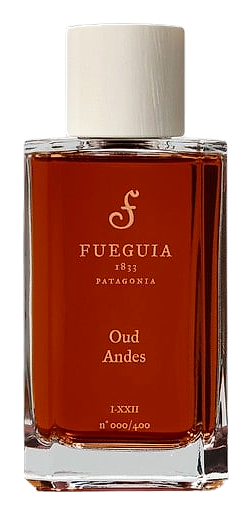
Oud Andes began with something Julian Bedel stumbled into during his botanical explorations across South America: the discovery that woods from the Andes could be fermented into an oud that had no precedent in perfumery. What started as field observation became a new material, produced through Fueguia 1833's own fermentation process applied to native Andean woods rather than the agarwood that defines the traditional category. Launched in 2022, the fragrance imagines a sensory cartography that stretches from Colombia down through Bolivia and Argentina into Chile. Oud that smells like altitude, like fruit grown in thin air, like a place your lungs remember before your mind does.
Most oud in the world traces back to agarwood, the resinous heartwood formed when certain trees are infected and stressed over years. What's unusual here is the material itself: woods native to the Andes, fermented rather than resin-tapped, yielding an oud that reads unlike anything in the existing canon. Where many oud compositions lean into heavy, animalic territory, this one tilts cool and sweet. The fruity sweetness carries an unexpected quality, lifted and slightly fermented rather than the syrupy ripeness of berry or stone fruit notes.
The evolution
The opening is almost too quiet to register, a cool wash of something fruit-adjacent that hovers rather than announces. The musk comes forward early, not white-musk clean but something fleshier, a skin-warmth note that gives the composition a pulse. The oud arrives slowly, threading through the middle like wood grain showing through polished stone, and it never gets heavy. This is where Oud Andes differs from most oud compositions: there's no barnyard turn, no medicinal spike, no smoke. Just a dry, slightly sweet woodiness that feels mineral rather than resinous. As the hours pass, the fruit retreats and what's left is a clean musk-oud skin scent that reads like the aftermath of something, not the event itself. The musk and oud settle into a quiet accord, each softening the other, with the faint sweetness still threading through underneath like a memory of the opening.
Cultural impact
Oud Andes sits in an unusual position: a Latin American house making oud from non-traditional material, working in a category that almost everywhere else still relies on the same old sources and the same old assumptions. For wearers, that makes it something genuinely new, a fragrance that wears like oud, smells like something else entirely, and asks you to reconsider what the word oud is allowed to mean. It doesn't argue with tradition or try to overwrite it. It just opens a door that wasn't there before, and lets you walk through it into a scent that has no real precedent.