
The Story
Why it exists.
The beginning
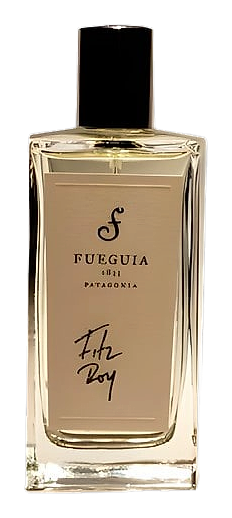
Fitz Roy takes its name from Robert FitzRoy, the captain of HMS Beagle whose 1833 voyage brought Charles Darwin to the shores of Patagonia. Julian Bedel named this fragrance for that meeting of navigation and discovery, two men who changed how we understand the world, arriving at the edge of it. The scent is built as a kind of olfactory expedition: no baggage, no excess. Just the core materials that can hold an idea and carry it somewhere unexpected. Violet opens, iris deepens, cedar grounds. Three notes. One direction.
The choice of violet, iris, and cedar isn't minimalism for its own sake. It's a specific tension: violet is soft and powdery, iris root is cool and almost mineral, cedar is dry and persistent. Together they create something that smells like a landscape rather than a perfume. No sweetness, no warmth, no florals competing for attention. The violet is floral but has that green undertone, the part of the flower closest to the stem. The iris adds earthiness that most people associate with the root, not the flower. The cedar anchors everything, slowly, without hurry. This is a composition that earns its simplicity.
The evolution
The violet arrives soft and immediate, not bright, not juicy, just present. Powdery in the way pressed flowers are powdery, like something dried and still holding its shape. It doesn't punch. It settles. Within the first hour the iris begins to show itself, a waxy, slightly earthy quality that shifts the character from floral to something more root-like. The violets are still there, but quieter now, making room. The cedar doesn't rush. It waits until the iris is fully established, then arrives as a dry, woody base that slows everything down. The drydown is the longest phase, quiet cedar that stays close to the skin for several hours after the florals have faded. On fabric, a faint violet trace survives into the next day. The sillage stays moderate throughout. Intimate, not projecting.
Cultural impact
Fitz Roy belongs to the Personajes collection, fragrances named for figures who shaped how we understand the world. It's a departure from conventional masculine scents, which tends to draw a specific kind of wearer: someone who finds performance anxiety exhausting, who prefers the scent that asks to be discovered over the one that announces itself. Community reception has been divided on projection, but consistent on character, the violet-iris pairing with dry cedar is distinctive enough to be polarizing, which is exactly the point.