The Story
Why it exists.
The beginning
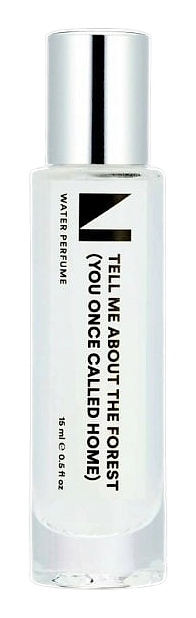
James Elliott made this one for the National Nordic Museum in Seattle. Filigree & Shadow operates as a small fragrance house built around the idea that scent can carry the weight of place and memory, that a single composition can pull up something buried for years. The name itself reads like a prompt: tell me about the forest you once called home. Not a tourist's forest. Not a hiking trail. The one that lives in the body, half-remembered, half-imagined, the kind that smells different depending on what you lost there. There's no gloss here, no perfume-counter showmanship. It's a composition that asks you to slow down, to lean in, to let the layers unspool at their own pace.
The composition is stripped to its bones. Five notes, nothing extra, and that restraint is the point. Ambergris opens with that oceanic, almost saline warmth, the kind of skin-scent that reads like living tissue rather than perfume. Juniper and thyme form a green, almost pharmaceutical heart, herbal in a way that feels ancient, like something you'd find hanging in an apothecary or growing wild along a stone wall. Then European spruce and pine take over, two conifers that anchor everything in cold air and resin. It wears like a walk through old-growth timber where the canopy filters out everything but the sound of your own breathing.
The evolution
The opening arrives quietly, almost tentatively, with ambergris laying down a saline, slightly animalic warmth that clings close to skin. For a stretch, the fragrance reads more like a memory of the coast than a forest: briny, soft, human-adjacent, the kind of warmth that feels like salt drying on bare skin after a long walk by the water. Then the juniper wakes up, sharp and green, and the thyme adds its dusty herbal edge, and suddenly you're somewhere inland, somewhere cold, the air thinning out and carrying a different kind of weight. The conifers settle in gradually and stay. European spruce gives it that dense, almost medicinal green bark quality, the scent of crushed needles and rough timber, while pine keeps it bright and sappy on top, lifting the composition with a resinous sweetness that never tips into syrup.
Cultural impact
This was designed as an exclusive for Seattle's National Nordic Museum, which gives it a specific cultural anchor rooted in the landscapes and traditions of the Nordic region, where dense evergreen forests carry centuries of folklore and quiet spiritual weight. The connection to Nordic heritage gives the composition a sense of place that feels earned rather than borrowed, grounding it in a tradition where the deep woods have always held meaning beyond their utility.