
The Story
Why it exists.
The beginning
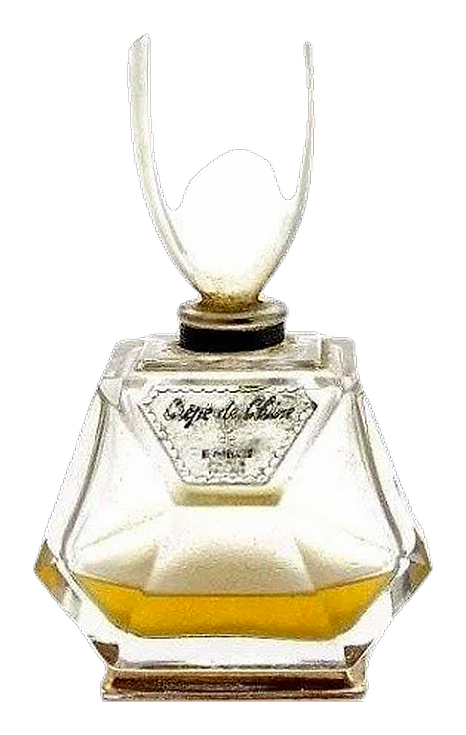
F. Millot, founded in Paris in 1860, built its reputation on compositions that rewarded the discerning nose rather than chasing trends. Jean Desprez inherited this philosophy when creating Crêpe de Chine in 1925, working within the house's conviction that perfume should endure. The aldehydic citrus opening and powdery iris heart reflect the house's preference for balanced, nuanced construction rather than frontal impact. Desprez grounded the fragrance in oakmoss and leather, materials that anchored the composition in the earthier aesthetic of its era.
The choice of iris, carnation, and leather in Crêpe de Chine reflects the house's appreciation for materials that reward close attention rather than announcing themselves loudly. The aldehydic opening signals the fragrance's era, while the oakmoss and sandalwood base ensure longevity on skin. Desprez balanced the bright citrus top with the powdery floral heart and earthy base, creating a fragrance that feels complete across all stages. This structural logic, prioritizing coherence over novelty, defines the F. Millot approach that still appeals to connoisseurs today.
The evolution
Crêpe de Chine begins with aldehydes and bright citrus, a luminous combination that feels simultaneously vintage and crystalline. Bergamot, lemon, and orange provide sparkling top notes, while neroli bridges toward the heart. As the fragrance develops, iris emerges as the dominant floral, supported by carnation, rose, and jasmine. The heart blooms with orange blossom, lilac, and ylang-ylang, creating a rich but controlled floral field. The drydown shifts to oakmoss and galbanum, with leather, heather, and benzoin adding warmth. The woody base of sandalwood, cedarwood, vetiver, and patchouli grounds the composition, while amber and musk provide a soft, lasting finish.
Cultural impact
Crêpe de Chine has been name-dropped by collectors as a reference point for later chypres, with some wearers noting structural similarities to Miss Dior. It remains a quiet touchstone, not a bestseller, but a fragrance that knowledgeable people recognize. The aldehydic powder structure has aged well enough to read as vintage-correct rather than dated, which is a narrow distinction that only certain compositions can claim.