





    Home/Brands/F. Millot

    F. Millot

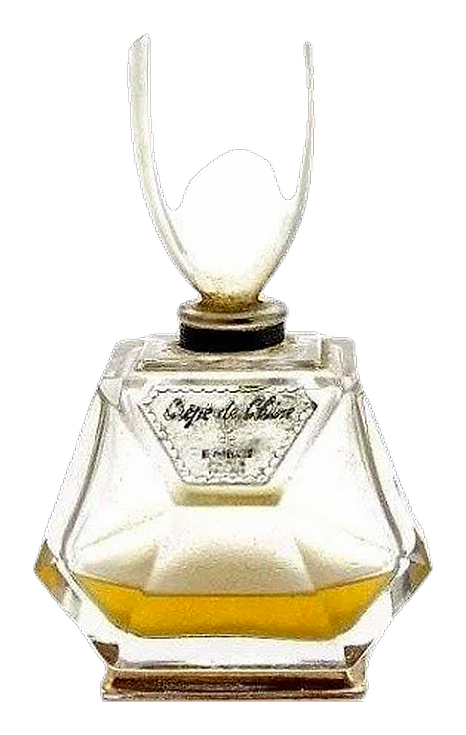
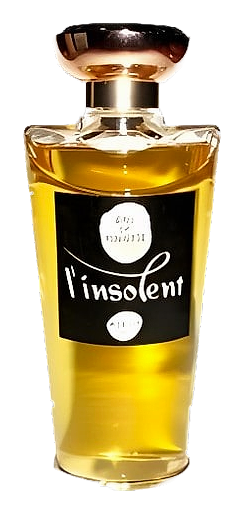
    F. Millot began in Paris in the mid‑19th century and grew into a quiet but influential perfume house. Over a century the brand released more than thirty fragrances, including the chypre Crêpe de Chine (1925) and the aromatic L’Insolent (1947). Though it never chased headlines, the house earned a reputation for balanced compositions that appealed to connoisseurs. In 1966 the label passed to Révillon, but its historic bottles still appear in museum collections and private libraries.

    FranceEst. 1860
    1
    Fragrances
    4.6
    Avg rating
    Shop the collection
    SignatureCrêpe de Chine
    Crêpe de Chine
    Cologne
    Community
    4.6
    Average rating
    across 1 fragrances
    Collection
    1
    Fragrances and counting
    Heritage
    1860
    Founded in France

    Most loved

    Bestsellers from F. Millot

    Crêpe de Chine by F. Millot
    F. Millot
    Crêpe de Chine
    4.6
    Compare prices
    Coming soonL'Insolent by F. Millot
    F. Millot
    L'Insolent
    5.0
    Coming soon
    Coming soonBois Precieux by F. Millot
    F. Millot
    Bois Precieux
    3.5
    Coming soon
    Coming soonPartner by F. Millot
    F. Millot
    Partner
    Coming soon
    Coming soonRevelry by F. Millot
    F. Millot
    Revelry
    4.5
    Coming soon
    Coming soonKantirix by F. Millot
    F. Millot
    Kantirix
    2.5
    Coming soon
    Coming soonRécital by F. Millot
    F. Millot
    Récital
    Coming soon
    Coming soonAltitude by F. Millot
    F. Millot
    Altitude
    2.5
    Coming soon

    Fresh in

    New from the house

    Crêpe de Chine by F. Millot
    F. Millot
    Crêpe de Chine
    4.6
    Compare prices
    Coming soonPartner by F. Millot
    F. Millot
    Partner
    Coming soon
    Coming soonRevelry by F. Millot
    F. Millot
    Revelry
    4.5
    Coming soon
    Coming soonL'Insolent by F. Millot
    F. Millot
    L'Insolent
    5.0
    Coming soon
    Coming soonBois Precieux by F. Millot
    F. Millot
    Bois Precieux
    3.5
    Coming soon
    Coming soonAltitude by F. Millot
    F. Millot
    Altitude
    2.5
    Coming soon
    Coming soonRécital by F. Millot
    F. Millot
    Récital
    Coming soon
    Coming soonKantirix by F. Millot
    F. Millot
    Kantirix
    2.5
    Coming soon

    Heritage

    A house, in its own words

    The story starts in 1819 when a perfumery opened in Paris for a Madame Millot. Félix Adolph Millot (1801‑1863) acquired the shop a few years later and renamed it after his family. He moved the business to a modest workshop on rue du Faubourg Saint‑Honoré and began to sell both raw essences and finished extracts. In 1860 Félix Millot’s son, also named Félix, officially founded the brand that would bear the family name. He entered the trade at age thirty, describing himself as a merchant‑manufacturer rather than a creator. The younger Millot focused on sourcing high‑quality raw materials from the Mediterranean, the Middle East and the colonies, then blending them in small batches. By the turn of the century the house launched Kantirix (1900), its first documented fragrance, followed by a steady stream of releases that reflected the changing tastes of Parisian society. Crêpe de Chine (1925) introduced a novel chypre structure that later scholars cite as a turning point in early modern perfumery. The interwar period saw the launch of Récital (1931) and Bois Précieux (1933), both praised for their refined balance of woods and florals. After World War II the house issued L’Insolent (1947) and Revelry (1948), scents that combined bright citrus top notes with deeper amber bases. The final original launch, Partner (1959), marked the end of an era; the brand’s creative output slowed as market pressures grew. In 1966 Révillon perfumes acquired the Millot name, integrating its archives into a larger portfolio. Today, the original bottles and formulas reside in the Osmothèque, France’s perfume conservatory, where Crêpe de Chine is listed as the first perfume entered into the collection. The Millot legacy endures as a reference point for scholars studying the evolution of French chypre and aromatic styles. F. Millot approached scent as a dialogue between nature and the laboratory. The house believed that a perfume should respect the character of each ingredient while allowing the composition to evolve on the skin. This modest philosophy discouraged flashy marketing and instead encouraged perfumers to study raw materials in depth. The brand valued consistency, so it kept the same sourcing routes for key notes such as oakmoss, bergamot and labdanum for decades. It also embraced a holistic view of well‑being, expanding into dermo‑cosmetics in the 1950s to offer products that cared for both scent and skin health. By treating fragrance as part of a broader lifestyle, Millot aimed to create scents that felt timeless rather than trend‑driven. The company’s archives show a preference for balanced structures, where top, heart and base notes interact without one dominating the others. This restraint reflects a belief that elegance arises from restraint, not excess.

    1819
    A perfumery opens in Paris for Madame Millot.
    1860
    Félix Millot officially founds the F. Millot house.
    1900
    First documented fragrance, Kantirix, is released.
    1925
    Crêpe de Chine launches, later recognized as a pioneering chypre.
    1947
    L’Insolent debuts, showcasing post‑war aromatic trends.
    1966
    Révillon perfumes acquires the F. Millot brand.

    The noses

    Perfumers behind the house

    Did you know?

    Interesting facts

    01

    Crêpe de Chine (1925) is cited by the Osmothèque founder as the first perfume entered into the conservatory’s archive.

    02

    F. Millot never employed a dedicated in‑house perfumer; the house relied on external creators and focused on manufacturing and distribution.

    03

    The brand’s early records show that oakmoss used in the 1930s came from the Vosges mountains, a region still prized for its moss today.

    04

    Despite its modest size, F. Millot produced a dermo‑cosmetic line in the 1950s, an uncommon move for perfume houses of the era.