The Story
Why it exists.
The beginning
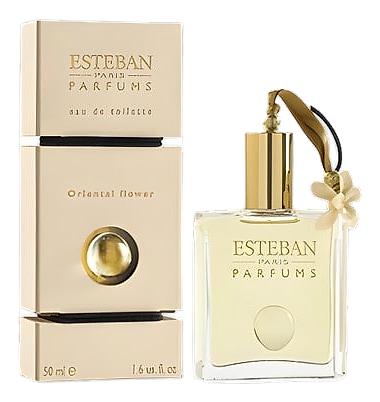
Oriental Flower arrived in 2008, part of a collection devoted to floral compositions in their many registers. The house had established its own approach to fragrance, one that valued personal experience over inherited luxury consensus. Oriental Flower fits that sensibility. The name suggests something more literal than the composition delivers, this isn't a soliflore recreation of a garden. It's an interpretation: what Oriental Flower means as an idea, translated into aldehydic citrus opening, tuberose heart, and a cedar-vanilla base that refuses to overstay its welcome. White florals done with restraint, anchored by aldehydes and cedar rather than the usual suspects. The composition speaks quietly rather than announcing itself, finding its power in balance rather than declaration.
What makes Oriental Flower's structure interesting is the lavender placement. Lavender typically lives in fresh or fougère compositions, it's herbaceous, cool, associated with cleansers and men's fragrances. Here it's a heart note, sitting between tuberose and orange blossom in an oriental framework. That positioning creates an aromatic counterpoint to the lush white florals. The florals don't soften the lavender; the lavender cools and sharpens them, adding complexity that prevents the composition from becoming simply sweet. The aldehydes serve a different function.
The evolution
The aldehydes announce themselves first, that characteristic effervescence, bright lift before the florals arrive. Mandarin slips in beside them, clean and bright, citrus zest cutting through the aldehydic shimmer. The combination fades before the white florals take over. Tuberose dominates the heart. Lush, creamy, with presence that makes it feel alive rather than perfumed. Orange blossom follows, its bitter floral quality adding depth. And there, threading through both, the lavender, aromatic, cool, unexpected in this context. The herbal note doesn't fight the florals. It creates contrast, keeps them from overwhelming. The drydown takes its time. Cedar arrives first, woody and dry, before vanilla emerges as a soft warmth underneath. The florals fade but don't disappear, they become a memory within the base, the tuberose occasionally surfacing before settling again.
Cultural impact
Oriental Flower occupies a specific corner: aldehydic white florals with an oriental base. The aldehydic-tuberose combination proves tuberose can be wearable rather than overwhelming. What distinguishes Oriental Flower is the lavender in the heart: an aromatic note that prevents the composition from becoming simply sweet. The powdery-woody drydown appeals to those who want white florals without the usual projection. The fragrance works best worn close, present for those nearby rather than announced from across the room. Its dedicated following has made it a quiet collectors' item for those who found it.