
The Story
Why it exists.
The beginning
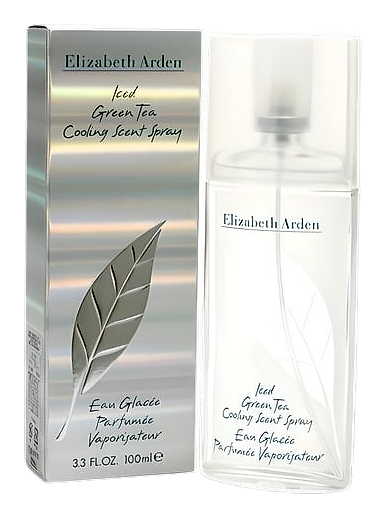
Francis Kurkdjian created Iced Green Tea in 2001 for Elizabeth Arden, building on the brand's tradition of accessible, everyday luxury. His intent was not to replicate an actual cup of tea, but to translate the sensation of it, the cool ceramic, the steam curling upward, that moment of clarity that comes with the first sip. Kurkdjian reached for mint and eucalyptus instead of actual tea leaves, constructing an aromatic interpretation of the ritual rather than a literal one. The result became a bestseller not because it was complicated, but because it understood what a lot of women wanted in the early 2000s: something that smelled like self-care without requiring an appointment.
The pyramid has an unusual feature: mint appears twice, top and base. That repetition is not an accident. It creates a through-line, mint as the spine of the entire composition, present at the opening and returning at the end like a memory. The heart is where it gets interesting. Eucalyptus is technically a top note in nature, but Kurkdjian pushed it deeper, letting it bloom after the citrus fades. Mandarin orange and orange add sweetness without softening the camphor edge. The base leans into warmth: amber and musk hold close to the skin, keeping the drydown intimate rather than projecting. This is not a fragrance that announces itself. It is one that rewards proximity.
The evolution
The opening is all mint and bergamot, bright, almost bracing, a hit of cold air. Lemon sharpens the citrus without adding sweetness. Within fifteen minutes, eucalyptus arrives like steam from a kettle, shifting the character from sparkling to medicinal. The citrus retreats. The green stays. For the next hour, the fragrance holds in this cool, slightly clinical phase, clean, but with a sharpness that some find refreshing and others find odd. As it approaches the two-hour mark, the amber and musk begin to surface. The eucalyptus does not disappear entirely. It lingers at the edges, a thread of camphor running through the warm base. The mint echoes back, like a memory of the opening. By hour three, the composition has faded to almost nothing, skin-close, intimate, a whisper rather than a statement. Some people catch it again the next morning on a scarf or a collar. Others do not. Either way, it is gone before lunch.
Cultural impact
By 2001, spa culture had moved from luxury to lifestyle. Elizabeth Arden, already known for making self-care accessible, was positioned to translate that moment into a fragrance. Iced Green Tea arrived not as an escape but as an everyday ritual, something you could wear to the office, the gym, or the grocery store and feel put-together without effort. It is the fragrance equivalent of drinking water with lemon first thing in the morning.