
The Story
Why it exists.
The beginning
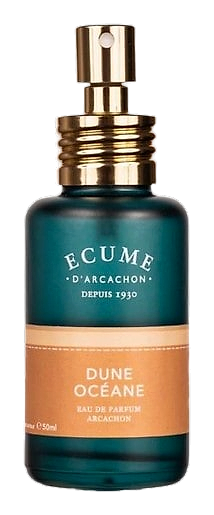
Dune Océane comes from Écume d'Arcachon, a French house whose identity is rooted in the Atlantic coast. The composition treats the coastal reference literally. Two notes rarely share the same perfume: the dry mineral crunch of beach sand and the pulpy sweetness of a fig left too long in the sun. The fragrance pulls both into a single blurred image, a stretch of coast where the tide has just pulled back and the heat hasn't lifted. The result is a composition that smells less like the ocean and more like the hour after you've been in it. There's salt there, but it doesn't announce itself as a marine accord.
What's distinctive here is the sand note placed in the heart rather than the base. The grainy quality sits alongside sweetness rather than beneath it, paired with fig and white blossoms so the two textures braid together. The grapefruit-rhubarb opening adds a tart, almost vegetal sharpness that keeps the fruit from turning syrupy, while the cashmere-coconut base wraps everything in a warmth that feels more like sun-heated linen than sunscreen. The sand doesn't behave as texture alone.
The evolution
The opening belongs to grapefruit, bright and slightly bitter, cut by rhubarb's green sourness. That tartness fades as fig swells into the space, and the white florals arrive with it, creamy and sunlit rather than soapy. Then comes the most surprising moment: the sand note lifts. It reads as a faint mineral dryness, like fine grit between your fingers, threading through the fig and preventing the sweetness from collapsing into jam. The coconut arrives quietly from below, warmed by cashmere wood, and the whole composition softens into something that smells like skin after a long day at the coast. The musk at the base sits close rather than projecting outward, a familiar skin-scent quality that makes the warmer notes feel intimate. What remains carries cashmere and coconut, faint but present.
Cultural impact
Dune Océane approaches coastal scent through fig, sand, and coconut, evoking a specific sensory memory: the warmth after swimming, the mineral grit on damp skin. The fragrance reads as an independent French composition, drawing on a mix of materials usually kept apart in conventional perfumery. Where some compositions chase clarity through single-note minimalism, this one layers warmth and grit in equal measure, letting sand and fig coexist in the heart of the structure. The result feels personal and atmospheric, closer to a memory than a postcard. The fragrance doesn't rely on projection to make itself known.