The Story
Why it exists.
The beginning
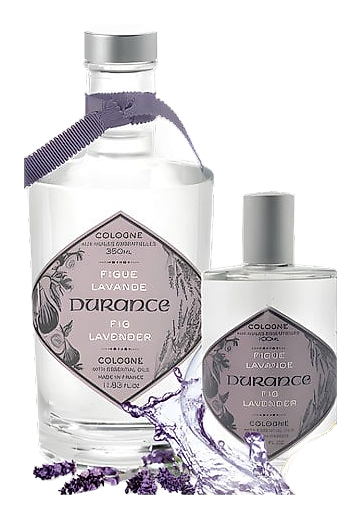
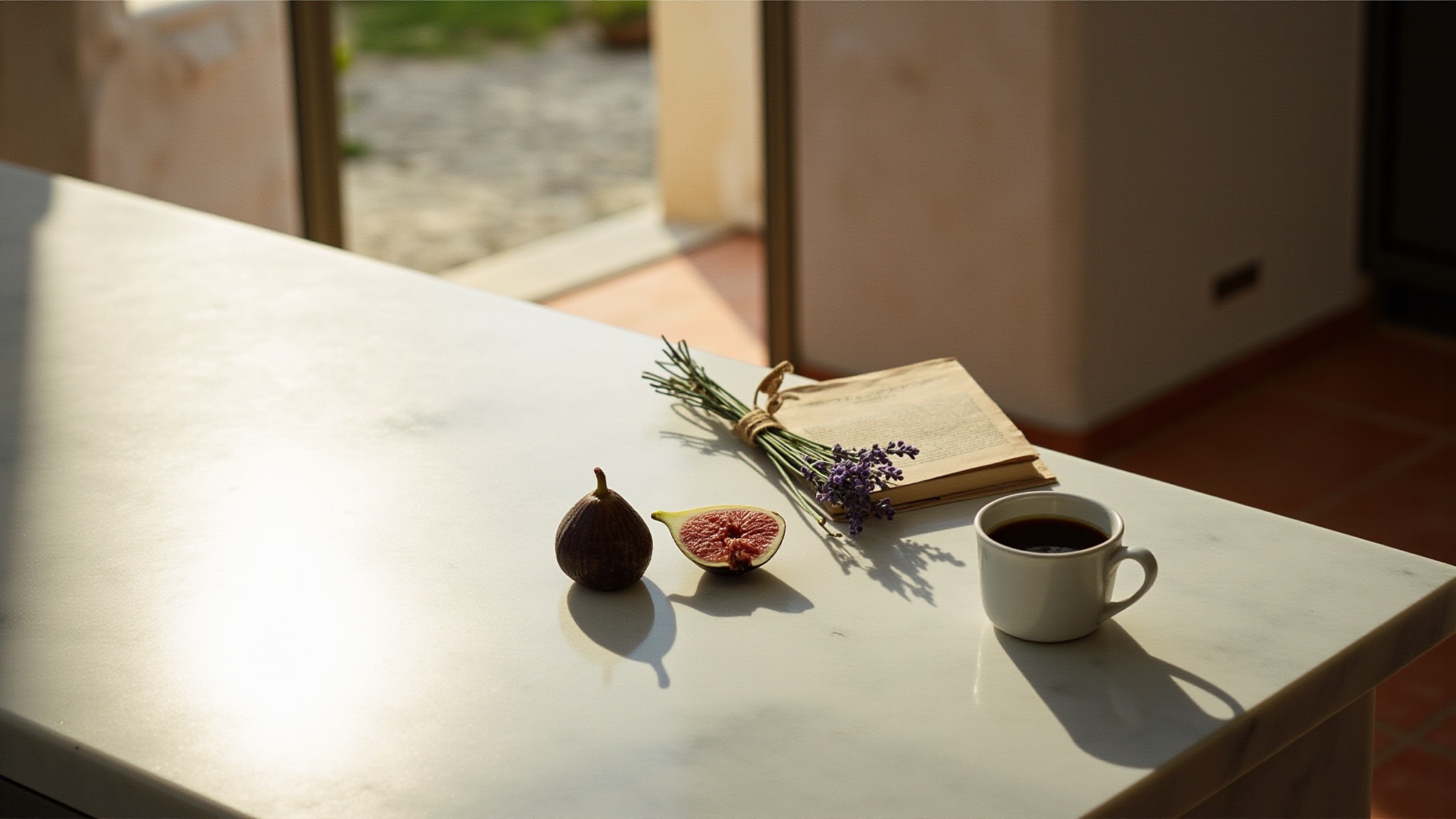
Some compositions argue with themselves. This one doesn't. Fig and Lavender came out of the Durance en Provence workshop in 2012. The intent is uncomplicated. A fig tree heavy with fruit. Lavender growing wild at its base. Two plants that share the same soil, the same sun, the same dry hill. No reason to separate them. The composition lets them coexist instead, each one intact, neither forced into the other's shape. You smell them as you'd find them in the wild, standing close but distinct. One offers a milky, almost coconut-like sweetness. The other brings a clean, herbal dryness with a faint menthol bite. Together they read as a single landscape, as a hillside in late summer, as the moment just before fruit and herb give way to each other.
Fig and lavender is an unusual pairing because the two notes live in different worlds. Fig leans toward something milky and coconut-adjacent, a sweetness that feels ripe and almost edible. Lavender pulls the other direction, clean and dry, with an almost mentholated edge that sharpens everything around it. Marrying them means finding the intersection where fig's creamy sweetness meets lavender's herbal clarity. It's the meeting point of fruit and herb at the moment of ripeness. Not the leaf. Not the jam. The fig in its late-summer prime, when the skin is just beginning to split.
The evolution
The first fifteen minutes belong to fig alone. Green, faintly milky, with a coolness that suggests the fruit was just picked and hasn't warmed in anyone's hand yet. There's a coconut-cream sweetness lurking underneath, but the leaf's sharpness keeps it restrained. Around the thirty-minute mark, the lavender slides in underneath. Not a lavender field in full bloom, which would be sweeter, almost soapy. This is lavender growing dry and resinous, with a hint of camphor that cuts through the fig's creaminess. The two notes don't blend so much as lean against each other, each one holding its shape. After two hours, the fruit recedes. The lavender holds, taking on a warmer, almost woody tone that feels sun-baked rather than fresh. By hour four, what's left on skin is a quiet herbal warmth, something woody and faintly sweet underneath. Not much throws after that.
Cultural impact
Fig and Lavender arrived in 2012 from Durance en Provence's workshop. The pairing itself carries weight, because fig and lavender aren't typical bedfellows in perfumery. Fig brings a creamy, almost edible sweetness. Lavender brings clean herbal sharpness. Putting them together creates something that feels both familiar and unexpected, a combination that evokes the Provençal countryside without resorting to the usual lavender-forward formulas. The composition became part of a lineup centered on what grows in the region, where the botanicals do the talking and the landscape sets the tone.