
The Story
Why it exists.
The beginning
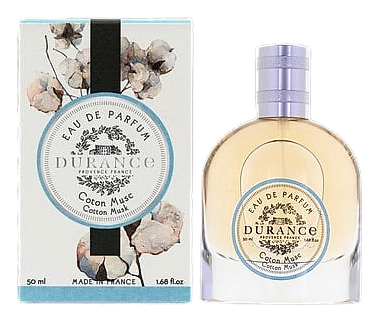
Cotton and Musk came from the Durance house's ongoing conversation with Provençal softness. The idea: what if clean wasn't a baseline but a destination? Not the sterile clean of modern detergents, but the comforting clean of linen dried in mountain air, brought inside and pressed close. The brief wrote itself, translate the sensation of cotton into something wearable, then make it last.
Clean cotton is an unusual target for a perfumer. There's no actual cotton note, cotton is a feeling, not a molecule. So the composition reaches for the texture through other means: heliotrope's powdery grain, the almond-blossom sweetness that suggests blossoms on the breeze, peony's soft petals layered over sandalwood's creamy wood. Each material earns its place by contributing to the impression of fabric next to skin. The musk doesn't overpower, it anchors, keeping everything intimate and close. What could have been a laundry-list exercise becomes something that actually smells like the thing it's named for.
The evolution
The opening announces heliotrope and peony in quick succession, a powdery-soft atmosphere that doesn't feel calculated. Almond blossom arrives within minutes, sweetening the deal without becoming saccharine. Thirty minutes in, the rose asserts itself, pinker than expected, warmed by sandalwood beneath. The iris adds a clean elegance that bridges florals and base. By the second hour, the florals have receded. What remains is the musk-vanilla-benzoin triangle, working in tandem: warm, slightly sweet, undeniably close to the skin. No sharp edges. No synthetic twang. The drydown on fabric smells like the scent left behind after someone comfortable has left the room.
Cultural impact
Durance en Provence sits comfortably in the space between heritage house and modern artisan, established enough to have a sense of self, small enough to take real risks with naming and positioning. Coton Musc launched in 2018 into a market that had rediscovered comfort scents, finding its audience among people who wanted intimacy over projection. The powdery-floral register has an established French precedent, Annick Goutal's Petite Chérie, among others, and Coton Musc occupies similar territory with a cleaner, more modern finish. The house's refusal to over-engineer the sillage is a statement in itself.