
The Story
Why it exists.
The beginning
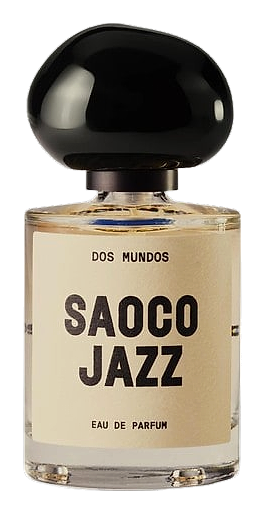
Saoco Jazz is Dos Mundos reading a night out as a single continuous track. The brand frames it as the moment a dim jazz lounge opens into something louder, more perreo, more sweat on the walls. The composition mirrors that arc: a refined, almost reserved opening built around bergamot, grapefruit, carrot seed, and hinoki cypress, the kind of accord that feels like a last drink at a quiet bar. Then the set changes. The 2025 release treats fragrance the way a DJ treats a transition. You don't just smell different. You feel the tempo change. Saoco Jazz is built as a single thesis track, a composition that earns its arc through restraint at the top and surrender at the base.
The choice of hinoki cypress in the opening is worth noting. Paired with carrot seed, which carries a dry, rooty, almost hay-like quality, it gives the citrus a wooden frame rather than letting it sparkle clean. The grapefruit reads less like a breakfast fruit and more like something squeezed over ice at 1 AM. It's a smart move, the kind of restraint that signals a small house composing for mood rather than for a first-impression sales pitch.
The evolution
The first twenty minutes are almost deceptive. Bergamot and grapefruit do their bright, polite thing, and the hinoki adds a clean woodiness that makes you think this is going to be an easy, breezy composition. Then the cedar and musk arrive and the temperature shifts. The musk reads as soft and smooth, the kind that settles into skin rather than sitting on top of it. By the two-hour mark the patchouli and vetiver have fully taken over, and the citrus is a memory. The drydown is where Saoco Jazz earns its name: warm, earthy, and weighted, the kind of base that feels rooted in the floorboards rather than floating above them. The cedar at this stage has lost its bright, freshly-sanded quality and turned darker, more resinous, blending almost seamlessly with the vetiver's smoky green edge.
Cultural impact
Saoco Jazz reflects a particular kind of fragrance storytelling that's been gaining traction: compositions that use personal and cultural reference points as their primary structure, rather than borrowing from the traditional masculine, feminine, or unisex category playbook. The jazz-to-perreo arc in this release reads less like a marketing pitch and more like a lived sequence, the kind of narrative shape that anyone who's moved between two sonic worlds in a single night would recognize.