
The Story
Why it exists.
The beginning
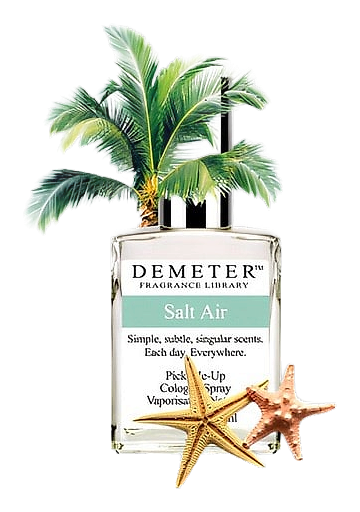
Salt Air arrived in 2000, one entry in a catalog that names its scents the way you'd name a photograph. The official description reads like a postcard: a perfect beach on a perfect tropical island, the kind of place that exists in memory rather than on any map you can fold. Demeter didn't try to build a complex marine accord or layer aquatic notes beneath a tower of supporting accords. They went straight for the source, naming the thing most people only smell on vacation and never on themselves. The result is one of the brand's quietly loved releases, a fragrance that does exactly what its label promises. Open the bottle and you get sea water, salt, and the faint mineral tang of tide pools left behind when the water pulls back.
What makes Salt Air interesting is its refusal to dress up. Rather than masking the sea water note under layers of supporting players, this composition strips everything back. The scent is almost entirely sea water and salt, given room to speak without interruption. The mineral edge of brine comes through clearly, and the salt reads as the damp kind that clings to skin after a swim, not the dry grains of a tabletop shaker. There's no heavy base anchoring it to traditional masculine or feminine territory, no floral lift adding sweetness, no woody undertone trying to ground it.
The evolution
The first five minutes are the loudest. Salt Air opens with a sharp, almost metallic hit of sea water, the kind of cold spray that makes your nostrils pringle. The salt registers immediately, bright and briny, carrying that unmistakable iodine tang of open water. As the composition breathes against skin, the initial brightness begins to settle. The salt moves from sharp and crystalline to something warmer and more textured, the kind of salt that dries on your forearms after a swim rather than the kind that stings your eyes. The sea water note softens too, losing its metallic edge and reading closer to sun-warmed sand underfoot than wave breaking on shore. The fragrance keeps a low profile as it wears, staying close rather than projecting across a room.
Cultural impact
Salt Air has found a loyal audience among wearers who treat fragrance as sensory experience rather than status symbol. Some reach for it during colder months when the beach feels far away. Others keep a bottle for summer exclusively, pulling it out when the weather turns warm and humid. The scent has also gained a following among people who experience scent-triggered memory strongly, those who want a fragrance that does one thing and does it well. It doesn't try to be a signature or a statement.