The Story
Why it exists.
The beginning
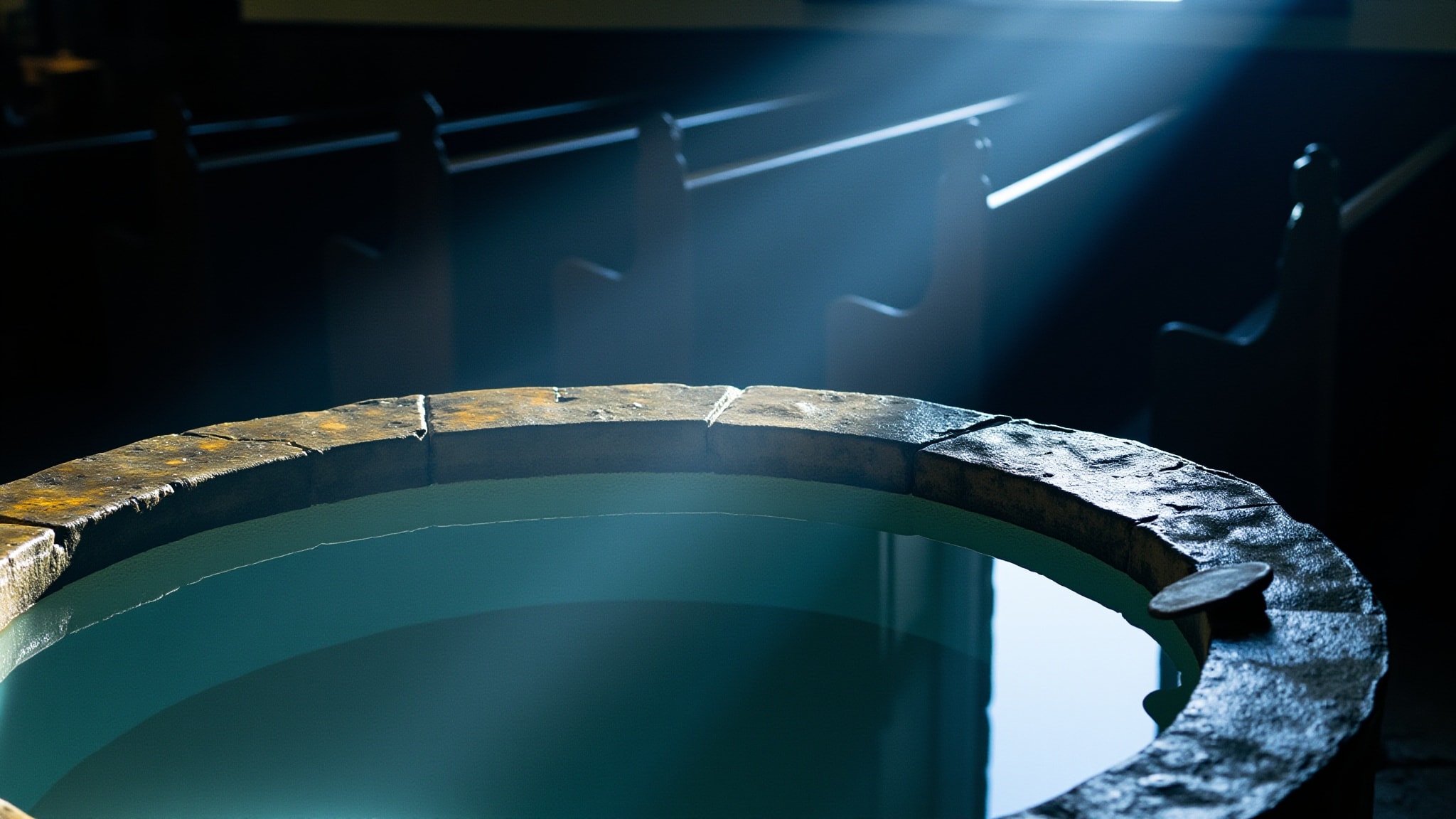
The story starts with a memory. Francis Kurkdjian created Holy Water in 2009 for Demeter Fragrance Library, and the brief was simple: translate a good memory of church into something you could wear. The porcelain font. Ozone-scented water. Oak pews, all mingled together. Rather than a reverent incense situation, the idea was to capture the blessed water itself, the stuff in an old stone container, somewhere off the beaten track in a small European town. That's the scent.
What makes it work is the cold. Holy Water doesn't go the bright, oceanic route most aquatics take. It stays contemplative, distant, almost still. The ozone gives it that electric clarity, the aquatic notes bring mineral depth, and the oak provides the warmth underneath. Three notes, working together to create something that feels cold and woody at once, rather than fresh and fruity. That's the unusual part.
The evolution
The opening arrives bright and electric, ozone shimmering like light on water. Within minutes, it shifts. The brightness pulls back and something cooler takes over, deeper and more submerged. This is the heart: cold aquatic, the kind that feels like it belongs in a stone font rather than a tropical beach. The oak doesn't announce itself. It arrives quietly, grounding the aquatic clarity with something worn and warm. By the drydown, the ozone has faded and the water has settled, leaving oak as the quiet anchor, woody, present, persistent for hours on skin. This is a fragrance for the quiet hours.
Cultural impact
Holy Water stands apart in the Demeter catalog, not a food, not a weather event, but a place and a ritual. It found an audience among people who wanted something contemplative in a line known for whimsy. The cold aquatic character appeals to those who find typical aquatics too bright, while the oak keeps it grounded enough for daily wear.