The Story
Why it exists.
The beginning
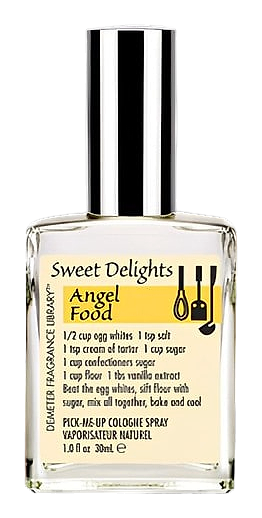
Angel Food came from the simplest possible question: what does coconut cake smell like? Not a complex idea. Not a layered concept. Just that specific, recognizable, deeply domestic moment, the smell of a cake cooling on the rack in a warm kitchen. The brand behind it, Demeter, was founded in 1996 in New York City's East Village by Christopher Gable and Christopher Brosius. Their premise was unusual: that everyday smells deserve the same attention as traditional perfumery ingredients. Thunderstorms. Vanilla extract. Clean laundry. The idea that nothing is too ordinary to bottle. For Angel Food, the reference point was unmistakably personal. The coconut in the formula comes from a generations-old Pennsylvania recipe, passed down through the family of the founding perfumer. That kind of detail, a family recipe finding its way into a fragrance, fits exactly what Demeter has always done. Taking something specific and real and making it wearable.
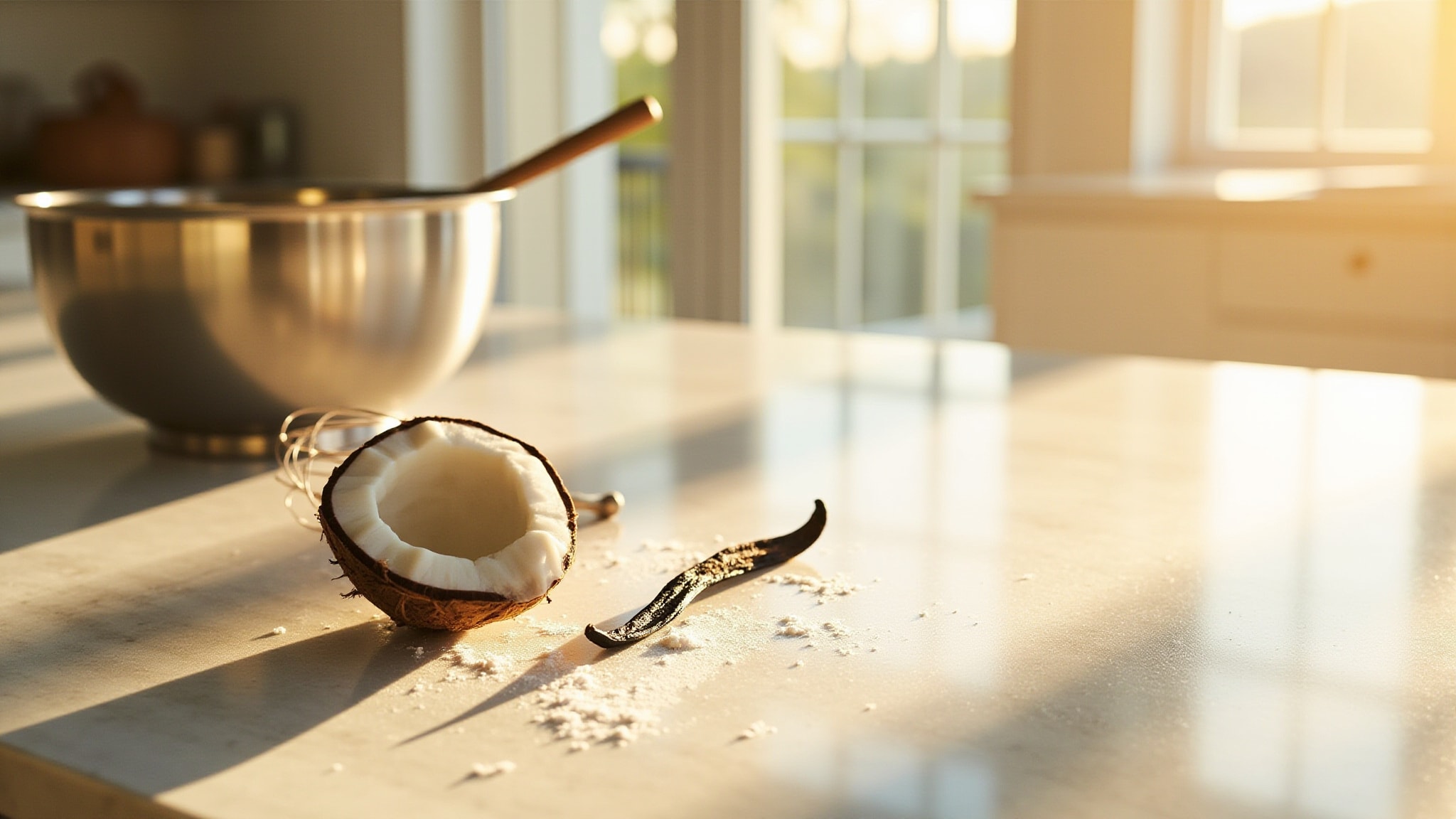
What makes Angel Food work is the restraint underneath the sweetness. Coconut and vanilla are both heavy hitters, ingredients that can easily tip into cloying if unchecked. Here, they're held in by the egg white note, which provides a lifted, almost foamy quality that keeps the composition from ever feeling dense or overwhelming. The sugar doesn't project so much as linger. It's there, undeniably sweet, but worn close to the skin rather than announced. The wheat note, subtle, gives just enough body to keep the drydown from disappearing entirely. And the almond at the base, quiet, soft, nutty, stops the whole thing from being pure cloud. This is a fragrance built on balance rather than impact.
The evolution
The opening is immediate and soft, coconut cream hitting first, backed by vanilla that reads warm rather than sharp. There's no top-note drama here, no bright citrus kick or unexpected spice. Just the warm, sweet smell of something baking, arriving close to the skin. Within the first hour, the egg white and sugar become more apparent, lifting the coconut-vanilla base into something airier. The lactonic quality, that soft, almost milky sweetness, becomes the dominant impression. It smells edible in a way that isn't heavy or overpowering. Think: the steam from a dessert tray, not a bakery counter. The drydown starts around the second hour. The coconut recedes slightly, the vanilla deepens and sweetens further, and the almond base emerges as a quiet, nutty warmth. Sugar is still present but softer, more integrated. By the third and fourth hours, what's left is a gentle vanilla-and-skin smell, intimate and close, the kind of thing only someone standing near you would notice. On fabric, the coconut and vanilla linger longest. On skin, it fades faster.
Cultural impact
Angel Food has a quiet but loyal following among people who want a fragrance that smells like food without smelling like a perfumery exercise. It sits in a specific niche: sweet enough to be unmistakably gourmand, light enough to wear in public without the self-consciousness that heavier food scents sometimes create. It's not trying to compete with complex oriental fragrances or niche creations, it's simply offering the smell of coconut cake in a 100 ml bottle. For the wearer who wants exactly that, it remains one of the most direct options available.