Egg White
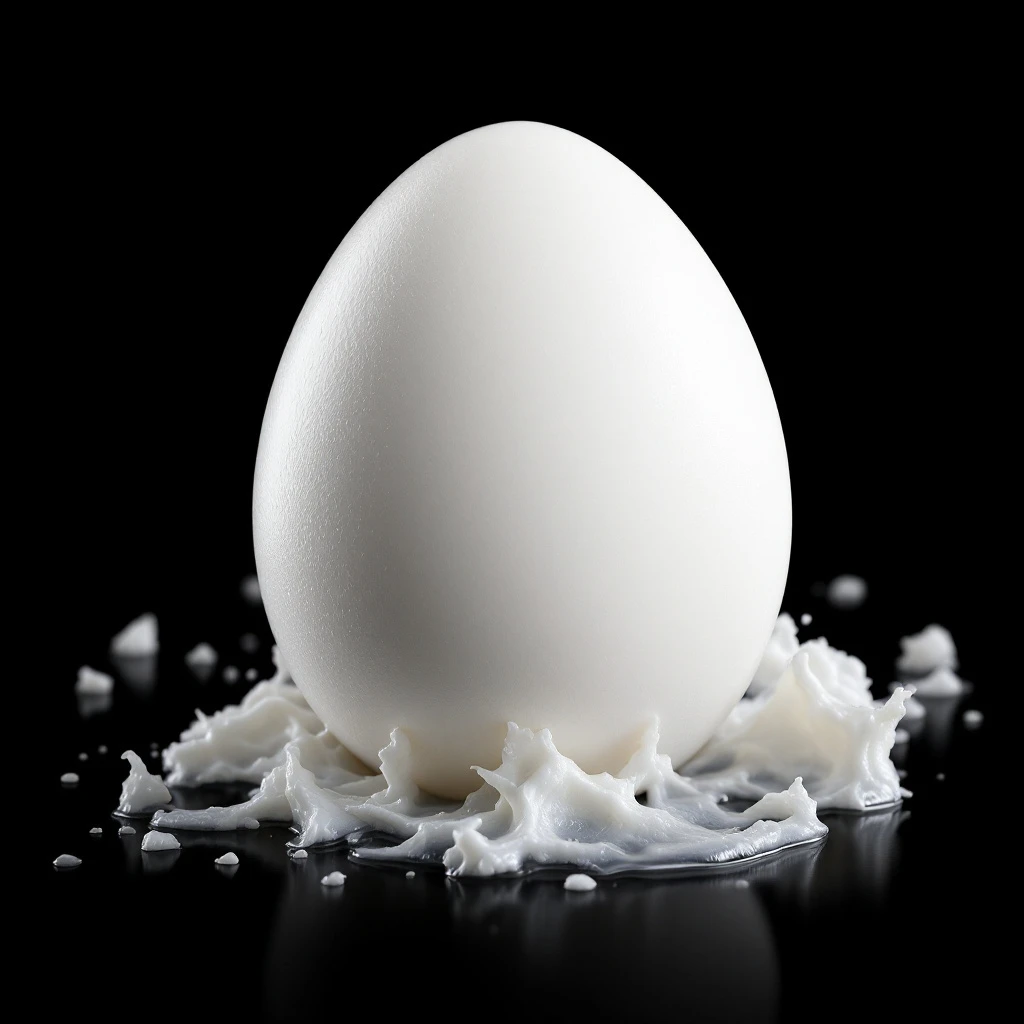
Egg white in perfumery serves as a traditional fixative agent, not a standalone fragrance note. The albumin protein binds volatile aromatic molecules, extending their evaporation and anchoring scents to skin. This animal-derived material played a quiet but essential role in classical perfumery techniques.
Character
How it smells
The fixative that made ancient scents last.
Medieval perfumers used egg white albumin to create solid perfumes called pomanders, which combined fragrant oils with protein to form a durable, wearable scent vehicle.
Pairs beautifully with



Origin
France
Animal-derived fixatives including egg white albumin have been used in perfumery since antiquity. Greek and Roman perfumers incorporated albumen into their pomades and scented oils to extend fragrance longevity on skin and fabric.
The practice continued through the Arabic golden age of perfumery, where chemists documented albumin as an effective binding medium for aromatic materials. Medieval European perfumers relied heavily on egg white when creating sachet pomanders and solid perfumes, as the protein could be shaped and dried while holding fragrant oils in suspension.
By the 19th century, as organic chemistry advanced, perfumers began developing synthetic alternatives to animal-based fixatives. Today, natural egg white albumin remains rare in commercial fragrance production, though it occasionally appears in artisanal and niche perfumery where historical authenticity drives formulation choices.
Wears it best
Fragrances featuring Egg White
Brands
Brands known for Egg White
Good to know
Questions, answered
The essentials on Egg White in perfumery: how it smells, where it comes from, and how it behaves on skin.
What is egg white's role in perfumery?
Egg white functions as a fixative agent in perfumery. The albumin protein binds volatile fragrance molecules, slowing their evaporation and extending how long a scent remains detectable on skin.
Does egg white add its own scent to perfume?
Egg white contributes minimal odor of its own. Its primary value lies in technical fixation rather than adding fragrance character, though some practitioners note a faint, subtle warmth in applications.
Is egg white still used in modern fragrances?
Natural egg white is rare in contemporary commercial perfumery. Modern perfumers typically use synthetic fixatives that replicate albumin's binding properties without the stability and sourcing challenges of animal-derived materials.
What historical perfumery techniques used egg white?
Enfleurage and pomander making historically relied on egg white. Perfumers incorporated albumen into fragrant pomades, allowing them to be shaped, dried, and worn as solid perfumes throughout medieval Europe.
Can people with egg allergies use products containing egg white albumen?
Allergy concerns exist for individuals with egg protein sensitivities. Most commercial fragrances have abandoned natural egg albumen, making allergic reactions unlikely in modern perfumes.
How much egg white is needed to fix a fragrance?
Historically, perfumers used small proportions relative to total formulation. Exact ratios varied by technique, though albumen was considered potent enough that a few drops or a pinch of dried powder could affect scent longevity noticeably.
What replaced egg white as a perfumery fixative?
Synthetic fixatives including synthetic musks and resinous materials replaced animal-derived albumin. By the early 20th century, chemist-developed compounds offered consistent performance without the instability of natural protein sources.
What does egg white smell like in perfumery?
Pure albumen contributes little aromatic character. When incorporated into perfumery, any scent impression is subtle and secondary to its primary function as a fixative for other fragrance materials.