The Story
Why it exists.
The beginning
Mắc CỠ is Vietnamese for 'shy plant', named for the mimosa pudica, the leaf that folds when you touch it. James Nguyen built this fragrance around that idea: something green and alive that responds to contact, that retreats into itself but leaves an impression. The name is the concept. The concept is the scent. Ginseng, holy basil, and saffron open sharp and alive. Then the earth arrives.
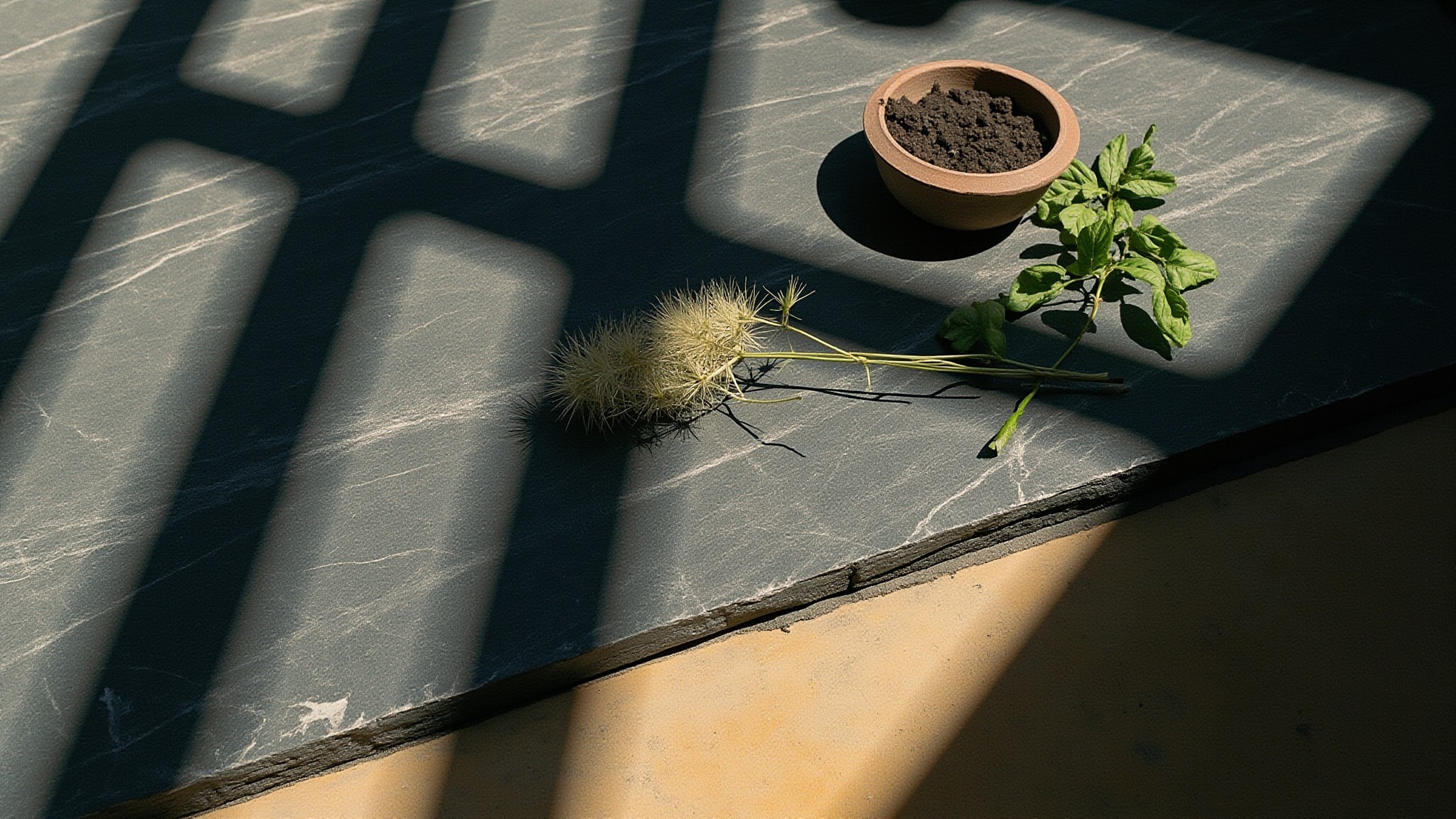
What makes this composition unusual is the clay. Not as metaphor, but as material, a tincture that brings mineral earthiness into the heart alongside green tea. Combined with mimosa, it creates a green freshness that never becomes sweet. The oakmoss and patchouli base doesn't soften the earthiness. It deepens it. This is a fragrance that respects its own character instead of apologizing for it.
The evolution
The opening hits with a green bite, ginseng and holy basil, sharp and herbal. The saffron threads warmth through the green without sweetening it. Within twenty minutes, the clay arrives, and the fragrance shifts from sharp to mineral, from herbal to earthy. The green tea and mimosa keep it from going fully dark, but there's no mistaking what this is. The drydown settles into oakmoss and patchouli, mossy and woody, close to the skin. On most skin types, it holds for 6-8 hours. The sillage stays moderate, this is a fragrance for the person, not the room.
Cultural impact
Vietnamese perfumery has long drawn from its rich botanical heritage, and the inclusion of ginseng in fragrance reflects a cultural reverence for adaptogenic herbs deeply rooted in traditional medicine. Holy basil, known in Vietnamese as 'húng quế,' carries spiritual significance in local practices, often used in rituals and ceremonies. Saffron, while not native to Vietnam, has been adopted across Asian markets as a symbol of luxury and exoticism. d.grayi's use of these three ingredients together creates a bridge between traditional herbal wisdom and modern olfactory expression, challenging Western perfume conventions by centering Asian botanicals as the protagonists rather than supporting players.