
The Story
Why it exists.
The beginning
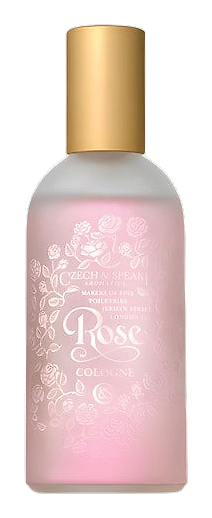
Czech & Speake launched Rose Cologne in 1985, designed by Shirley Brody, as an answer to a specific question: what does rose smell like when it stops trying to seduce? The brand had spent the early 1980s building a reputation for restraint, compositions that spoke quietly but held their ground. Rose was the logical extension of that philosophy, a soliflore that refused to shout. Brody built the structure around a tension: rose's natural sweetness against geranium's green, almost medicinal cut. Neither dominates. The rose doesn't romanticize; the geranium doesn't sharpen into aggression. Instead, they arrive together, botanical and alive, the way the flower actually smells when you bend down to touch the stem.
The note pyramid is tight, four materials in the heart and base combined. What makes it work is proportion. Mimosa and ylang-ylang bring warmth without sweetness, a velvety quality that could read as exotic in a heavier hand but here simply softens. Patchouli anchors everything, keeping the florals earthbound and intimate rather than airy and diffuse. This restraint is the point. Rose Cologne doesn't try to do everything, it does one thing and stays there. The green thread of geranium threading through the rose is the signature move, the detail that separates it from sweeter, more conventional rose compositions that came before and after.
The evolution
Rose Cologne opens crisp, geranium's green bite cutting through before the rose fully arrives. The handoff takes thirty seconds. Then the two are inseparable, the rose warmer and more interesting for the geranium's presence. The heart arrives gently. Mimosa and ylang-ylang layer in softness, but patchouli is already beginning its work beneath. There's no sharp transition, the florals warm as they develop, the composition settling into itself rather than transforming. By the third hour, the rose has receded and patchouli leads: earthy, quiet, lasting. On fabric, it holds into the evening. On skin, six to eight hours depending on the surface. The morning after, there's a faint green-and-earth trace at the wrist that you have to lean in to find. The fragrance never becomes loud. But it refuses to leave.
Cultural impact
Rose Cologne arrived in 1985 with a quiet confidence that hasn't aged. In an era when rose fragrances leaned heavily into romance, this one chose restraint, green and botanical, intimate rather than announced. That quality has only become more distinctive. Wearers describe it as the scent of someone who doesn't need the room to notice.