
The Story
Why it exists.
The beginning
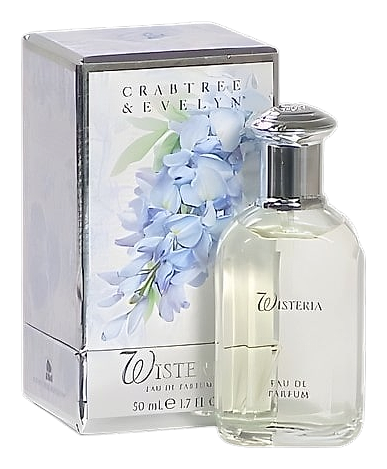
Crabtree & Evelyn built its identity on botanical gardens and travel-collected curiosities. Wisteria (2003) was the brand's way of bottling something harder to find in perfumery: the actual feeling of an English garden in late spring. Not a single flower note, but the idea of abundance, the weight of purple blooms hanging heavy, the shade beneath them, the air sweetened by everything nearby. The perfumer chose restraint over spectacle, letting wisteria carry the composition without the tropical fruit cocktails that dominated women's fragrances at the time. It was a deliberate quietness in a loud category.
What makes Wisteria's structure interesting is the interplay between freshness and softness. The clover and violet top open cool and almost green, preventing the heart from feeling immediately sweet. Then honeysuckle and lilac arrive, both white florals with a honeyed edge, but they're anchored by sandalwood from the start, not waiting for the drydown. The result is a fragrance that doesn't dramatically shift from top to base. It all breathes together, quietly. Musk in the base keeps the powdery quality from becoming dusty, giving the drydown a skin-close quality that reads as familiar rather than aged.
The evolution
The opening arrives cool and dewy, violet's green snap over clover's herbaceous hush. It lasts maybe fifteen minutes before the heart takes over, and the transition is smooth: no hard cutoff, just a gradual softening as honeysuckle and lilac join. Wisteria itself is subtle in the opening, emerging fully only as the green top notes fade. By hour two, the composition has settled into its main register: creamy white florals over sandalwood's warm wood, Musk keeping everything close to the skin. The sillage drops noticeably after the first hour, moderate at best. By hour four, it's a skin scent: powdery, intimate, the kind of presence that only someone standing very close would notice. On fabric, the wisteria lingers until the next morning, softer but still recognizable.
Cultural impact
Wisteria arrived in 2003, a year saturated with fruity florals and celebrity fragrances competing for attention. In that context, its quietness was almost radical, a women's fragrance that refused to announce itself. It found an audience among people who wanted sophistication without performance, filling a niche between mass-market florals and the louder niche releases of the era. The fragrance has since been discontinued, but it remains a reference point for those seeking soft, powdery florals with British restraint.