The Story
Why it exists.
The beginning
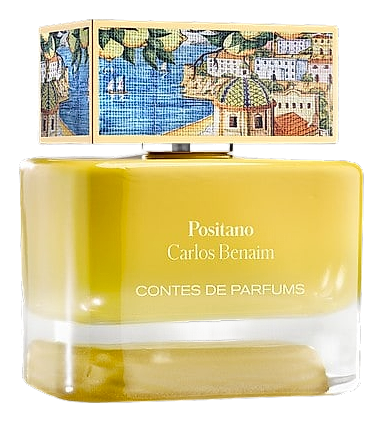
Carlos Benaïm didn't arrive in Positano chasing the postcard version. The research copy describes his fascination with the tiny, steep gardens overflowing with lemon and orange trees, pots of lavender, bay leaf, rosemary, and thyme, the aromatic grammar of Mediterranean cooking rather than its scenery. That's what Positano translates: not a view, but a smell. The citrus and herbal character carries that specificity, built to evoke the kitchens and terraces rather than the coastline itself. It's a city portrait that refuses the obvious angle.
Hay and lavender might seem like an odd pairing for a Mediterranean fragrance. But they share a quality, both are dry, warm, and slightly animalic when they appear in nature, especially in the garrigue landscape that sits between the coast and the hills. Used together, they create something that smells like dried herbs left in the sun, the aromatic foundation of Provençal and southern Italian cuisine. Benaïm uses them to anchor what could easily become another generic citrus-ocean fragrance. Instead, Positano smells like the land behind the beach, the herbs growing between the lemon trees, the hay baled on the hillside above the turquoise water.
The evolution
The opening hits bright and tart, orange oil and blackcurrant give an immediate citrus punch, but the blackcurrant adds a dark, slightly bitter edge that keeps things interesting. Within twenty minutes, the turmeric makes itself known, a warm earthiness that cuts through the sweetness. The citrus doesn't disappear, but it steps back. The heart belongs to lavender and hay, with the marine quality sitting underneath like a memory of the sea rather than a declaration of it. By hour three, vetiver and patchouli take over, earthy and dry, with a thread of musk keeping everything close to the skin. The citrus never fully leaves, it pulses back through the drydown on warm skin, a reminder that this started in the sun. Lasts 6-8 hours on most people, with moderate sillage that requires leaning in to appreciate the full arc.
Cultural impact
Since its 2022 launch, Positano has quietly built a following for doing what most Amalfi citrus fragrances fail to do: it refuses the expected path. Rather than offering a straightforward coastal freshness, it leans into mineral earthiness and herbal depth, capturing a less-photographed side of the Italian coast. The Cities Collection concept gives each scent a sense of place beyond the postcard, and Positano delivers on that promise by distilling the experience of wandering inland from the beach into the rocky hillside villages. This approach has resonated with wearers seeking Mediterranean warmth without the typical marine sweetness that saturates the genre.