
The Story
Why it exists.
The beginning
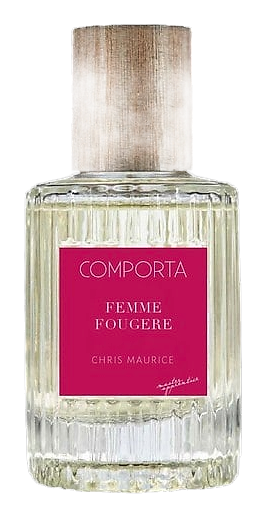
Chris Maurice took the fougère, a structure defined for over a century by lavender, oakmoss, and coumarin, and rebuilt it entirely around femininity. Not a softened version. Not an adapted version. A complete rethinking. The brief was simple: a fougère that mirrors the deepest femme fatale essence, where complexity and confidence are assumed, not earned. The name says everything. Femme Fougère is not an apology for the genre. It is the genre, claimed.
The structure is what makes this interesting. A classic fougère relies on herbal freshness as its backbone; here, that backbone is replaced by patchouli, earthy, dark, and unapologetically present. The fruity top notes (litchi, pear) and the orange blossom create an immediate impression of softness, but the tuberose in the heart refuses to stay delicate. It swells, almost heady, held in check only by the amber warmth beneath. What results is a fragrance that reads as both approachable and complex, sweet enough to draw people in, grounded enough to stay interesting once they're there.
The evolution
The opening hits bright, litchi's tropical sweetness and pear's crisp fruitiness arrive together, softened by orange blossom that feels less like a floral accent and more like a veil. Within twenty minutes, the tuberose begins to assert itself. Not subtle. The creamy, almost narcotic quality of white floral rises through the composition, finding its counterpoint in patchouli's earthiness. The amber doesn't sweeten the deal, it deepens it, resinous and warm. By the second hour, the fruity top notes have receded but haven't disappeared entirely; they linger at the edges, keeping the heart from becoming too heavy. The drydown is where this fragrance earns its hours. Musk and sandalwood create a skin-close warmth that doesn't project aggressively but doesn't fade either. Vanilla and tonka bean settle in like a slow exhale. On fabric, this fragrance is still detectable the next morning, a faint warmth, sweet and woody, that suggests something worn rather than applied.
Cultural impact
Femme Fougère occupies a specific space: a feminine reconstruction of a traditionally masculine structure, built for someone who wants complexity without sacrificing approachability. The patchouli-forward drydown distinguishes it from more conventional fruity-florals, while the Comporta branding, Portuguese coastal minimalism, Atlantic quietude, keeps it from reading as mainstream. It's the kind of fragrance that rewards attention: the tropical opening draws people in, the tuberose-patchouli heart makes them stay, and the skin-close drydown ensures they remember it.
The House
Comporta PerfumesComporta Perfumes is a Portuguese niche fragrance house that channels the unhurried elegance of Comporta, a coastal village south of Lisbon known for its rice fields, pine forests, and wild Atlantic shores. Founded in 2017 by Pedro Simões Dias, the brand presents itself as a vehicle for storytelling through scent, translating memories, landscapes, and moments into wearable compositions. The collection spans atmospheric orientals, breezy aquatics, and resinous compositions that reflect both the Mediterranean landscape and Dias's broader travels across Europe. The brand operates with a small but deliberate catalog, releasing fragrances at an unhurried pace rather than flooding the market with seasonal flankers. Comporta Perfumes occupies a distinctive position within the niche fragrance community by grounding its work in specificity of place while maintaining an understated visual identity.
The Creator
Christian Carbonnel a.k.a. Chris MauriceCarbonnel is at his most distinctive when building rich, layered oriental compositions that unfold over hours on the skin. He favors high-quality natural materials and constructs fragrances with real depth—top notes that sparkle, heart notes that develop, and base notes that a…