
The Story
Why it exists.
The beginning
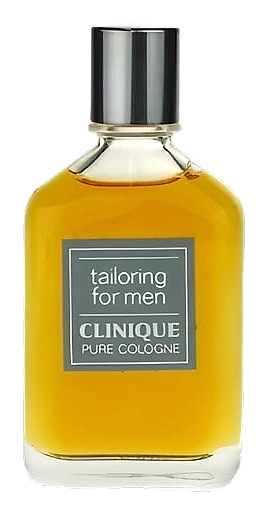
Tailoring for Men arrived in 1984 from Clinique, the skincare-driven brand that sits under the Estée Lauder Companies umbrella. Where so many fragrances of its era leaned into richness and complexity, this release went the opposite direction. Clean. Linear. The kind of scent that asks nothing of the wearer except to put it on and go. The name says the rest: a fragrance designed the way a good suit is designed, with structure, fit, and nothing extraneous. The bottle follows the same logic, an unfussy, weighty rectangle that looks like it belongs on a shelf rather than a vanity. Released during a period when the market was crowded with louder offerings, its restraint felt almost declarative in itself. There is no smoky resin pulling focus, no sweet gourmand trailing behind.
What makes it interesting is what it leaves out. Most men's fragrances of the early 1980s were chasing either the bold fougère architecture of the previous decade or the heavier oriental direction the market was beginning to drift toward. Tailoring for Men sits between them and refuses both. The accord structure, lavender and citrus over a soft aromatic base, reads almost like a study in restraint. No heavy woods, no animalic warmth, no synthetic sweetness. Just the two ingredients that have signaled masculine freshness for nearly a century, deployed without ornament.
The evolution
The first thirty minutes are all citrus, bright and slightly sharp, the way lemon zest smells before it lands on anything. There's a barber-shop quality to it, almost utilitarian. Then the lavender steps forward, not the dusty herbal lavender of old-school fougères but something cleaner, more translucent. It doesn't darken. It doesn't get complicated. The middle hours settle into a soft aromatic blur, lavender still legible but cushioned by whatever Clinique's base compounds contribute, a clean musk, a faint woody warmth that never announces itself. On skin, it runs four to six hours before becoming a close, almost impressionistic trace. The next morning, on a collar or a pillowcase, there's a ghost of it: soapy, herbal, calm.
Cultural impact
Tailoring for Men arrived when the men's fragrance market was splitting between heavy orientals and sharper sport fragrances, and it quietly occupied neither category. It's remembered by collectors as one of the cleaner, more restrained masculine releases of the mid-1980s, a scent that smells less like a product launch and more like a well-kept habit. Wearers tend to come back to it as a second-skin fragrance, the thing they reach for when they don't want to think about what they're wearing.