The Story
Why it exists.
The beginning
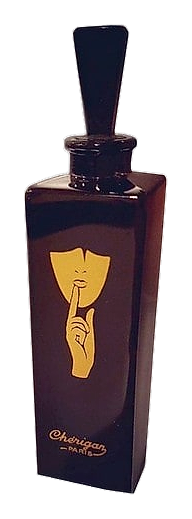
Mascarades arrived in 1929, the same year its name says everything about it: a fragrance built around faces worn and shed, the quiet theatre of being seen. There is something inherently performative about wearing a scent that calls itself Mascarades, and Cherigan leaned into that idea with complete confidence. The flacon itself was designed by Cristalleries de Nancy, and the object lived on a dressing table like a confession, heavy enough to anchor a room, gilded enough to catch candlelight, almost jewel-like in the way it sat there waiting to be picked up. This was a fragrance made for the woman who understood that the most interesting conversation is the one happening underneath the one you're having.
What makes Mascarades distinctive is its restraint. The composition whispers where it could have shouted, holding its powdery iris-orris heart like a private dialect rather than a public declaration. Cherigan treated that tradition as something to be murmured, not broadcast, a vocabulary shared only between the scent and the skin wearing it. The gilded black-glass flacon was the performance; the scent inside was the private cut. A fragrance designed for the woman behind the mask, not the one in the lights, and one that earns its intimacy by never raising its voice.
The evolution
Mascarades opens with a soft veil, the sparkle restrained rather than sharp, like champagne poured into a crystal glass you can barely hear clink. There's a brightness, but it's muted, deliberate, polite. Within the first twenty minutes, the powder arrives. Not baby powder. Not makeup powder. The kind of powder that smells like the inside of a lacquered jewelry box, like face powder pressed into a compact in 1929, like skin that hasn't been seen in candlelight. The heart settles into a dense floral-orris blend that holds steady at the center, neither competing for attention nor yielding the floor. This is the longest phase, and it barely changes. Mascarades doesn't develop so much as deepen, settling into itself with the patience of something that knows it doesn't need to perform.
Cultural impact
Mascarades occupies a specific register in fragrance history: the 1920s Parisian powder, composed with a discipline that sets it apart from louder florals and heavier orientals of the same period. Its restraint is the point, a quiet sophistication that refuses to announce itself across a room. The fragrance rewards the wearer who treats it like a private language rather than a public statement, and it lingers as a reminder of a moment when French perfumery understood that the most interesting things happen in the spaces just beneath the surface.