
The Story
Why it exists.
The beginning
Burberry Sport Ice for Men arrived in 2011, composed by Sonia Constant. The name says everything. Sport. Ice. It's Burberry's answer to the question every heritage house faces: how do you stay relevant when your customer is sweating through a spin class? The answer was a fragrance that borrowed the cool of cold water and the clean heat of ginger, two notes that shouldn't work together but do. It joined a men's collection known for restraint and gave it an athletic pulse.
What makes this work is the tension. Aquatic notes are inherently synthetic, they're constructed molecules, not distilled flowers. That gives perfumers control. In Sport Ice, the aquatic accord functions like a cold compress, keeping the ginger's spice from becoming sharp or overwhelming. Meanwhile, juniper berries add an aromatic lift in the heart, something between forest and sea. It's a formula built for people who want freshness that doesn't apologize for itself.
The evolution
The opening hits citrus and ginger together, bright, immediate, almost effervescent. For about thirty minutes, that's the story. Then the aquatic accord takes over, and the fragrance shifts from energetic to cool. The juniper in the heart is subtle, a whisper of green beneath the marine. By hour two, the cedar and musk arrive. That's when it settles. Not loud. Not distant. Just there, dry wood, clean skin, the faint warmth of amber underneath. By hour five, it's skin. By hour six, it's a memory.
Cultural impact
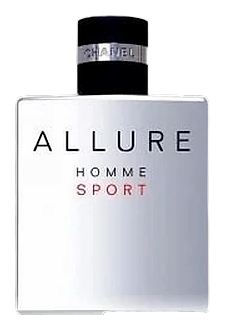
Sport Ice occupies the middle ground of aquatic fragrances, not as austere as Dior Homme Sport, not as sweet as the typical designer sport flanker. It's Burberry doing what it does best: applying heritage restraint to a contemporary category. The ginger note sets it apart from the usual citrus-and-seaweed formulas. Wearers who appreciate it tend to be people who want freshness without anonymity.