
The Story
Why it exists.
The beginning
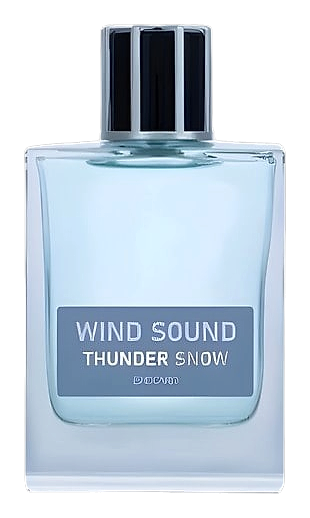
Thunder Snow landed in 2022, with the nose behind the fragrance credited to Christian Vermorel. The name borrows from an atmospheric event rare enough to stop traffic: a snowstorm accompanied by thunder, bright and disruptive against the white silence of a February plain. Vermorel built the composition to capture that split-second contrast, where winter quiet meets something electric. The scent opens with a cold metallic flash, aldehydes snapping like a voltage burst across a frozen field, then pivots into something warmer as resinous wood anchors the structure below. Pine and sandalwood do the heavy lifting in the base, giving the bracing top notes something to settle into, while a persistent marine undertone keeps the whole composition tethered to its cold-weather premise.
What makes the construction unusual is the aldehyde dose sitting on top of a marine-woody base. Thunder Snow leads with one of the most attention-grabbing materials in modern perfumery, then softens the landing by dropping you into pine, sandalwood, and a warm ambergris effect driven by ambramone. The aldehydes never fully leave, but they stop shouting. That structural choice explains why the wearer's experience feels closer to a weather event than a typical daytime scent.
The evolution
The aldehydes land first and they land hard, a sensation more felt than smelled for the first five minutes, like static on a sweater. A brief citric brightness threads through the opening, giving the metallic charge something almost edible to lean against. Around the opening phase pineapple rounds things out into something more generous, its sweet green sharpness catching the aldehydes and softening their edge without dulling them. An hour in, the aldehydes have quieted to a hum and pine carries the conversation, with black pepper threading a faint warm current through the green. Coriander adds a quiet leafy spice in the background, lifting the pine rather than weighing it down.
Cultural impact
Thunder Snow entered the Brocard catalog in 2022, composed by Christian Vermorel, pairing aldehydes with pine and pineapple in a structure that reads as bracing and mineral rather than the softer aquatic template more common in the category. The aldehyde opening behaves differently across skin types, sometimes reading more metallic, sometimes more soapy, depending on the wearer's chemistry. The sandalwood and ambramone in the base give the composition a longer tail than its cleaner aquatic cousins, with a woody trail that holds close to skin rather than projecting broadly into a room.