The Story
Why it exists.
The beginning
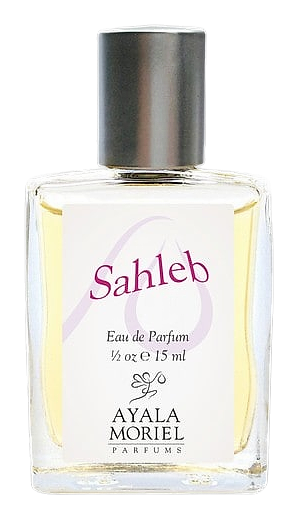
Sahleb takes its name from a Middle Eastern winter drink, a warm pudding brewed from a root whose name shares its root with the Arabic word for orchid. The beverage is flavored with rosewater and crushed mastic resin, then crowned with coconut, pistachio, and a dusting of cardamom. Ayala Sender, also known as Ayala Moriel, the nose behind the house, set out to bottle that ritual in 2008. The result reads as a translation of comfort rather than a literal recreation of food, a composition built on botanical perfumery and natural fragrance that treats the act of wearing it as something gently nostalgic.
What makes Sahleb unusual is its material center. Orris root, the creamiest expression of the iris rhizome, serves as the structural core, functioning almost like a buttery scaffold that holds the other notes in place rather than acting as a powdery accent at the edges. Mastic resin lends a slightly smoky, vegetal bitterness that grounds the sweetness and keeps the composition from drifting into something too confectionary. Turkish rose absolute softens the orris with a floral density that reads as warm rather than sharp, while ambrette seed weaves through with a musky, skin-like undertone.
The evolution
The opening is the most fragile moment. Coconut absolute and ambrette seed arrive almost shyly, giving a soft, slightly nutty lift before the rose settles in. Turkish rose absolute and rosewood move through the early minutes like a slow pour, warm, slightly syrupy, never sharp. Coriander adds a clean, almost soapy greenness that keeps the rose from turning too ripe. As the composition develops, the orris root begins to assert itself and the fragrance takes on its true identity. The orris is creamy, powdery in the old-school sense, and folds into the butter CO2 to create a sensation closer to warm fabric than food. Mastic appears quietly here too, lending a faintly resinous bitterness that most wearers sense as 'medicinal' before they can name it.
Cultural impact
Sahleb translates a specific cultural ritual into wearable form, in this case, a Middle Eastern winter beverage. It sits comfortably as a piece of food-memory perfumery without leaning on imitation. The composition reads as the kind of scent a wearer chooses privately, for themselves, rather than to project, which gives it a quiet intimacy that suits its inspiration.