The Story
Why it exists.
The beginning
Trazarra arrived in 1978, one entry in a long run of men's colognes from Avon. The composition itself is an Oriental Woody, built on a spine of spicy warmth, powdery florals, and a musky animalic undertone that gives the scent its seriousness. Heliotrope lends a cherry-almond powder that reads less like a traditional floral and more like something dusted from a vanity tray. Civet brings a raw, almost visceral musk that most men's colognes of the period wouldn't have touched. Sandalwood and oriental notes anchor the whole composition, giving the powder and animalic warmth somewhere to settle into. The result is a fragrance that feels deliberate, weighted, the kind of scent a man reaches for when he wants the room to notice without his having to announce anything.
The unusual player here is the heliotrope, a note that reads as cherry-almond powder rather than a traditional floral. When it meets civet, a musky animalic note long used in perfumery, the composition gets a friction most men's colognes of the period avoided. The heliotrope pulls sweet and powdery, almost confectionery, while the civet drags a rougher, warmer current underneath. Sandalwood and oriental notes anchor the whole thing, giving the powder and musk something warm to settle into. The interplay between those two poles, the soft and the raw, is where Trazarra finds its personality.
The evolution
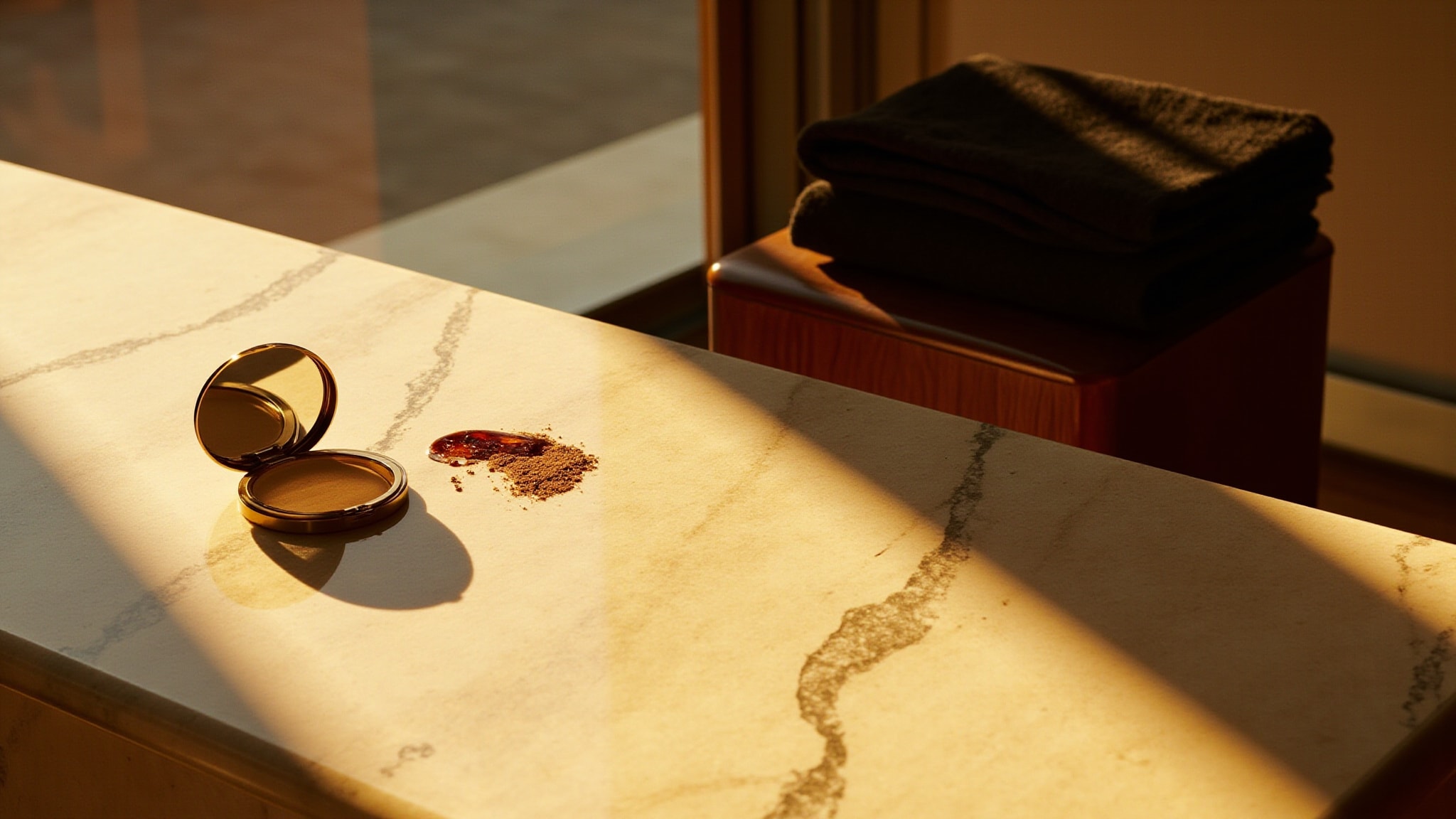
The opening smells bright and warm, something effervescent cutting through the dusty air before the heavier notes have time to settle. Then the heliotrope arrives, mauve and powdery, dragging civet along behind it like a rough companion. The civet doesn't announce itself so much as seep in, threading through the powder and turning it slightly dirty, slightly alive. As the composition dries down, the sandalwood rises, turning the powder warmer, less cosmetic and more lived-in. The oriental base deepens alongside it, adding resinous warmth that keeps the whole thing from collapsing into something flat. What stays longest is the granular, talc-soft base: a sweet amber-musk that clings to fabric and skin with a quiet persistence. The civet never fully leaves.
Cultural impact
Trazarra sits among the more distinctive men's colognes of its era, a fragrance that took the period's taste for animalic warmth and committed to it fully. Where many compositions of the late seventies played it safe with clean musks and straightforward woody bases, Trazarra reached for civet and powder, the kind of notes that signalled a more serious approach to perfumery. Heliotrope gives the scent its cherry-almond softness, while civet introduces a raw, almost unsettling warmth that lifts the composition out of the ordinary.