The Story
Why it exists.
The beginning
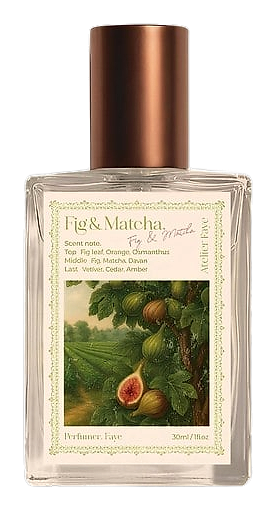
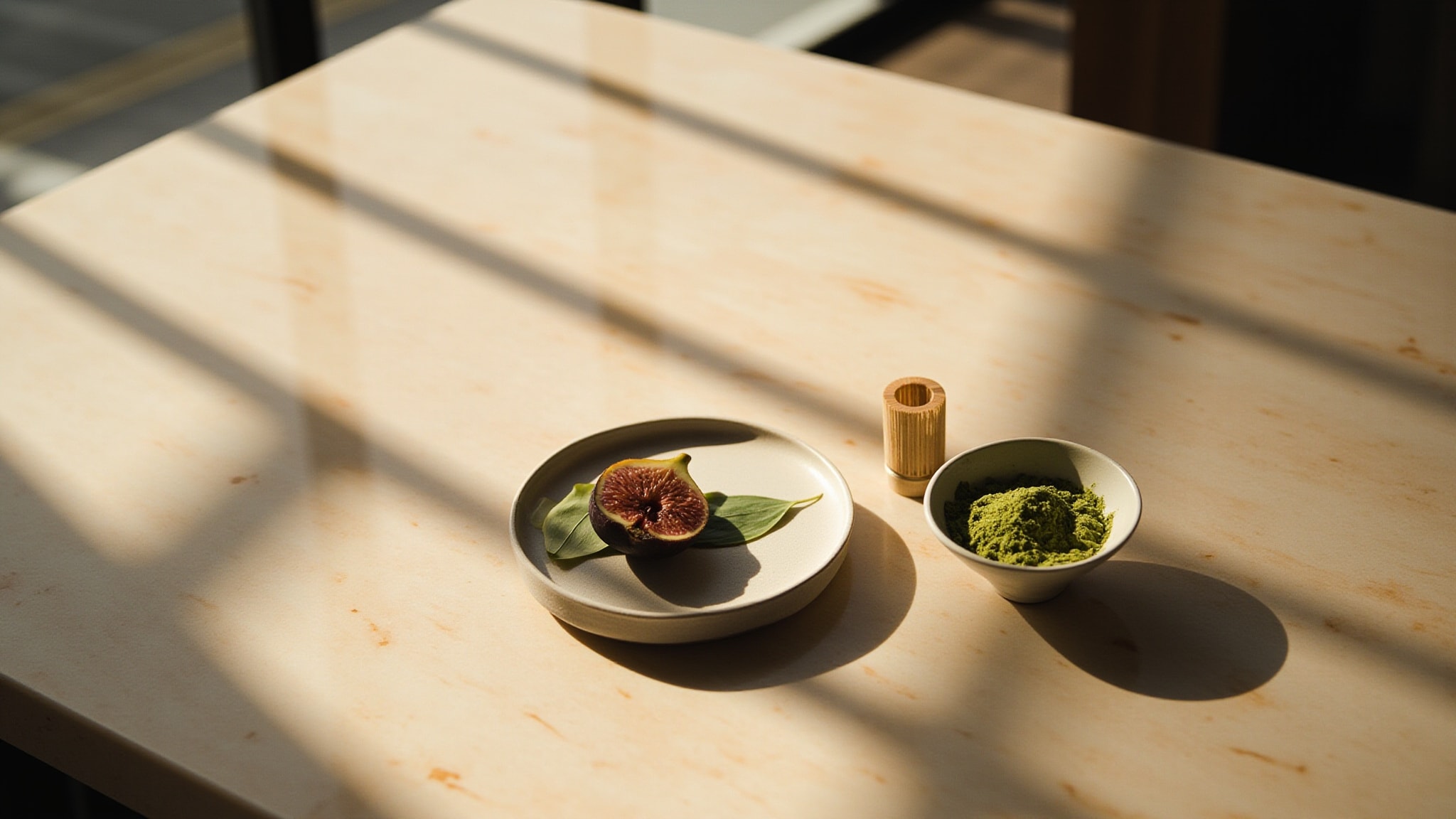
Fig & Matcha arrived in 2025 from Atelier Faye, a house whose work rewards attention. The name announces its intention without ceremony. Fig and matcha. Two materials that share almost nothing in temperature, texture, or cultural register, and yet here they sit side by side in a composition that asks you to reconsider both. It is the kind of pairing that only a house willing to trust its audience would attempt. Not a safe crowd-pleaser. Not a flex either. Something quieter and more specific: a study in green, in patience, in the space between bitter and sweet where the composition lives and breathes. The opening carries the snap of fig leaf, sharpened by orange peel and threaded through with osmanthus's apricot warmth.
What makes this composition interesting is the unlikely conversation between fig and matcha. Fig carries warmth and sweetness, a lushness that can tip into overripeness if left alone. Matcha moves the other direction, dry, green, powdery on the surface, almost stony in its dryness. Layered together with osmanthus, davana, and fig leaf on top, then grounded by vetiver, cedar, and amber underneath, the two materials negotiate rather than clash. The fig keeps the matcha from feeling austere. The matcha keeps the fig from collapsing into jam.
The evolution
The first minutes are the greenest thing about it. Fig leaf and orange arrive together, sharp and slightly bitter, with osmanthus already threading its apricot-cream softness underneath. It reads bright, almost vegetal, like the smell of tearing a fresh leaf away from its stem. Then the matcha arrives, and the whole thing shifts. The green deepens. It becomes drier, more mineral, less fruity. Davana adds that bruised, fermented sweetness around the twenty-minute mark, and suddenly the composition feels warmer, rounder, almost boozy in its fruitiness. Fig blooms late, around the forty-minute mark, but it is never the loudest voice. By hour two the opening brightness has settled into a powdered, almost-chalky softness where the matcha reads as skin-dust rather than beverage. The cedar arrives in the late hours, dry and a little resinous, giving the green a wooden frame to rest inside.
Cultural impact
Fig & Matcha reads as a statement of intent from the first spray. The pairing is unusual enough to feel deliberate, two materials from different registers forced into conversation and then refined into something coherent. It appeals to fragrance wearers who want green compositions with structure and a point of view, who appreciate bitterness held in balance with sweetness rather than airbrushed out of the formula entirely. The fig present here is not the syrupy, dessert-leaning fig of mass-market launches. It is drier, leafier, more insistent, treated as a serious material rather than a comfort note.