
The Story
Why it exists.
The beginning
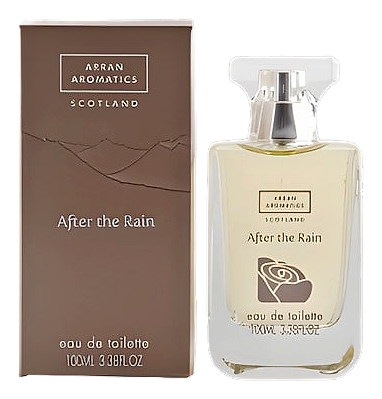
After the Rain was born from a specific moment on the Isle of Arran. Founder Janet Russell wanted to capture the exact quality of air she encountered walking through the island's hillsides after rainfall, that mineral clarity, the way the earth smells different when the rain has just stopped. Released in 2005, it became the brand's most recognized work almost immediately, drawing people who wanted to wear a place rather than a concept. The name itself is the brief: not rain, but after rain, the exhale, not the storm.
The structure mirrors the name. Citrus opens bright and brief, like the first break in clouds. The rose carries the emotional weight of the composition, not a loud floral, but a quiet one that softens everything above it. The woods and musk in the base represent what remains after: the settling, the quiet, the sense that something has been washed clean. It's a fragrance built for the aftermath, not the event itself.
The evolution
The opening hits quick, lemon, lime, mandarin orange. Bright, clean, slightly tart. This phase moves fast, maybe 15 to 20 minutes before the hand-off. Then the rose arrives. Not a splashy rose, something quieter, almost dewy. The citrus doesn't disappear; it recedes, becoming a background warmth rather than the headline. The base is where this lives longest. Sandalwood and musk settle close to the skin, with a soft powdery quality that stays intimate. On fabric, it can last into the next day, that clean, rain-washed smell returning in the morning.
Cultural impact
After the Rain has become ARRAN's signature, the fragrance most people name when they mention the brand. It occupies a specific space in the fresh-citrus genre: not aquatic, not soapy, but mineral and green. Wearers tend to describe it as clean without being generic, and the island inspiration gives it a sense of place that mass-market fresh fragrances often lack. It's the kind of fragrance that works year-round but reads best in cooler months, when that rain-washed quality feels most relevant.