The Story
Why it exists.
The beginning
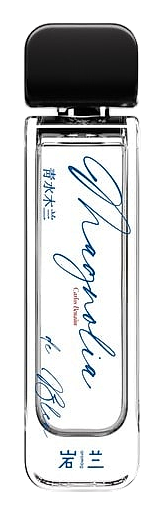
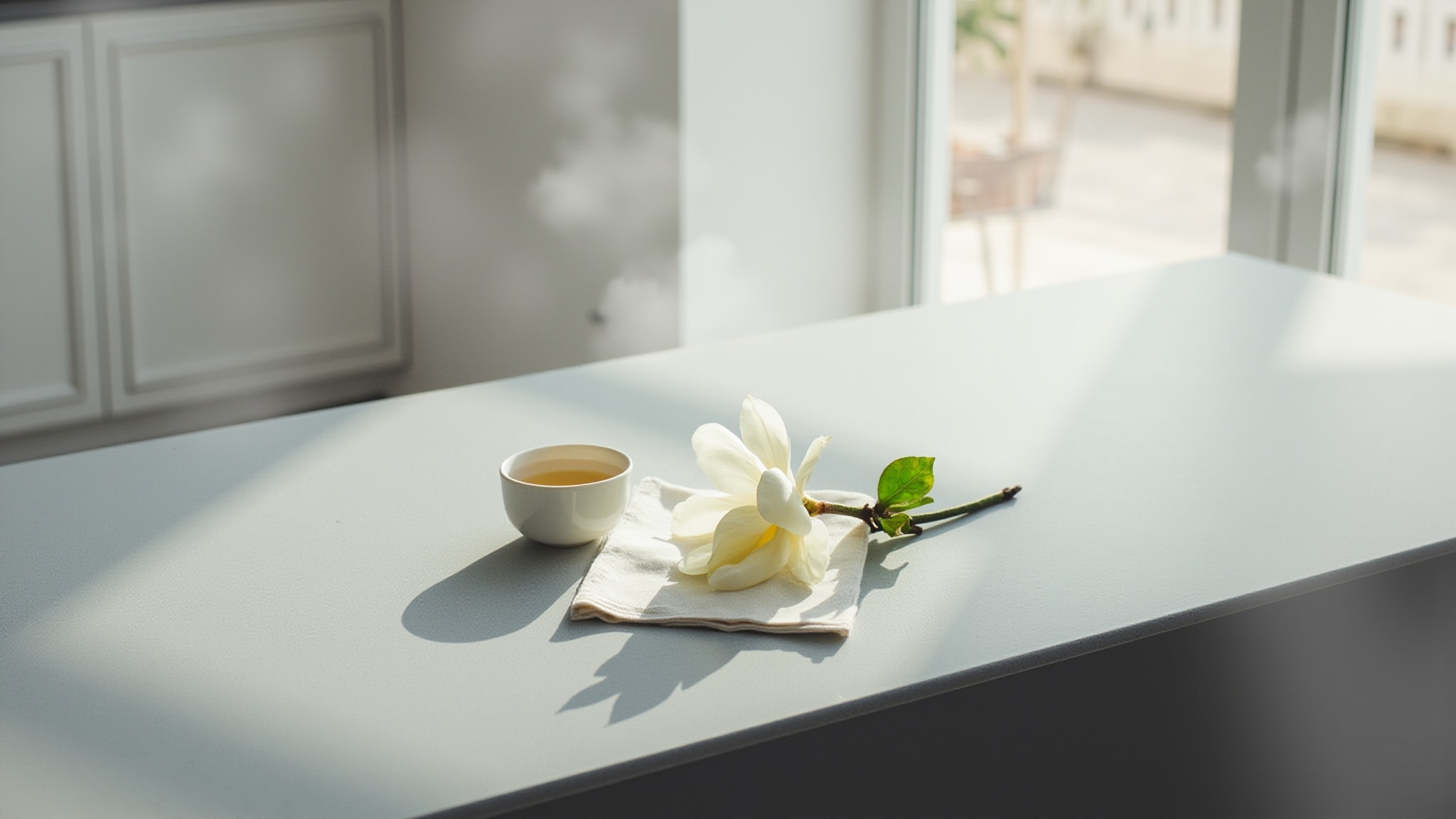
Magnolia de Bleu launched in 2025, the work of Carlos Benaïm, a perfumer whose hand shaped the composition. The name translates loosely as "blue-green magnolia," though the scent itself reads more luminous than melancholy, more alive than still. The Chinese name opens its own register of meaning. Each character carries weight: the first evokes a shade caught between blue and green, the second carries the flow of water, the third names the magnolia itself. Aromag built the brief around a specific vision: that early-spring moment when air shifts and light thins. Benaïm brought the structure. The house brought the cultural ground, the sense of what magnolia means in Chinese visual language, a flower rendered clean and deliberate rather than heavy.
White magnolia and white champaca anchor the composition, both drawn from the same botanical family. Pairing them gives the floral core a layered quality, each flower shading the other in ways a single magnolia note couldn't manage alone. The florals move together, then apart, then back again as the hours pass. Sinfonide sits in the structure, a synthetic note that keeps the air moving through the composition. Without something cutting through, white florals can slide toward the dense, soapy territory that flattens their dimension.
The evolution
The opening belongs to the citrus and green notes. Neroli, bitter orange, a whisper of rhubarb tartness that reads almost like the skin of a green fruit, not the cooked kind. Sinfonide lifts the whole opening into something translucent, a brightness that feels lit from behind. Then the white magnolia arrives, and it doesn't sneak in. It takes the wheel. Champaca joins the magnolia early, adding a fruitier warmth that rounds the sharper edges. Orange blossom stays close throughout, a thread connecting the top to the heart. As the composition settles, the jasmine begins to surface more clearly, soft, never heavy, honeyed without tipping into syrup. The rhubarb's tartness fades as the hours pass. What's left is a creamy white-floral haze, still bright but no longer sharp.
Cultural impact
Aromag's collaboration with Benaïm on Magnolia de Bleu reads as a statement of creative direction. The house set the brief, named the flower, chose the cultural register, then handed the perfumer room to work within it. That kind of collaboration, where the brand holds the vision and the perfumer holds the formula, produces a different kind of result than either could alone. The fragrance itself reflects that balance. White florals done with clarity, structure that lets each note breathe, a composition that stays close to the wearer rather than projecting outward.