The Story
Why it exists.
The beginning
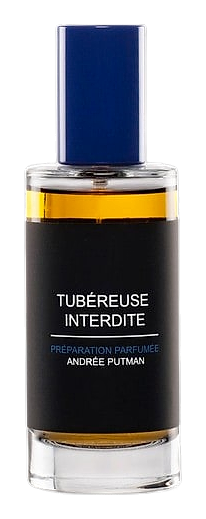
The name comes straight from the flower itself: a tuberose bred for perfumery but long considered too provocative, too much, to use freely. Andree Putman released this in 2017 as part of a collection built on the same restraint Putman brought to architecture. But restraint doesn't mean holding back, it means choosing what matters and letting it matter fully. Tuberose was the choice here. The forbidden one. The approach has always favored clarity over clutter, intention over excess, and that philosophy runs straight through this composition. The scent's structure demonstrates this ethos, a white floral executed with precision, where every element earns its place. The fragrance takes its name from the flower's complicated history and treats that history as the point, not the problem.
What makes this work is the structure. Neroli and peach open things gently, almost innocent, before white pepper arrives to interrupt. Then the heart: three white florals stacked together, with tuberose doing the heavy lifting. Gardenia adds creaminess, orange blossom adds brightness, but tuberose dominates. It's not subtle, but it earns its volume through the opening setup. The white pepper isn't decoration; it gives the florals something to push against, a reason to assert themselves. The amber-benzoin base doesn't soft-pedal either, it leans warm and resinous, a foundation that supports the florals for hours rather than letting them exhaust themselves early.
The evolution
First minutes: peach and neroli create something soft, almost fresh. The white pepper appears almost immediately, a quick spice that lifts the sweetness before it can feel precious. Then the hand-off. Tuberose moves in, flanked by gardenia and orange blossom, and the whole composition thickens. This is the phase that earns the name: tuberose that's been let off the leash, intense and narcotic. It doesn't ease in. It arrives. The drydown takes its time. Amber and benzoin build warmth beneath the florals, and the musk anchors everything, keeping it close to skin rather than projecting outward. The animalic quality emerges here, that sticky-sweet, slightly dirty undertone that makes tuberose infamous. It doesn't disappear. It deepens into something warm, present, and impossible to ignore. On fabric, that warmth lingers: amber, musk, the ghost of florals.
Cultural impact
The Putman fragrance collection has always attracted wearers who understand the power of restraint. Tubereuse Interdite continues that positioning: tuberose for someone who wants the flower at full intensity, not tamed into something safe. It's a fragrance that appeals to a specific sensibility, culturally literate, design-aware, interested in what something does rather than what it shouts. For those who find the flower's reputation intimidating, this scent reframes it, not as something to fear but as something to claim on your own terms.