
The Story
Why it exists.
The beginning
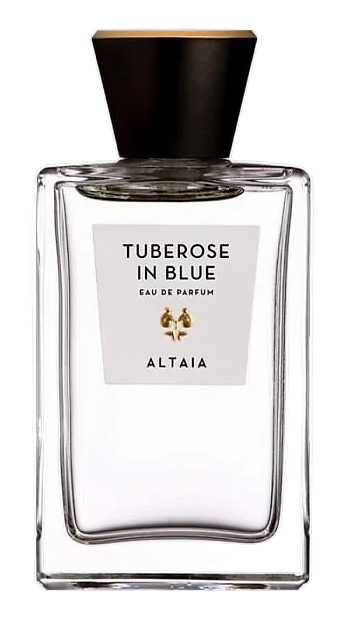
A stopover somewhere tropical, the kind that rewrites your whole sense of distance. ALTAIA's Tuberose in Blue draws from an Atlantic crossing, the moment an old car begins its ascent and the world outside the windows turns cobalt and floral at once. Nathalie Lorson composed the 2017 release around that single image: butterflies in the air, tuberose drifting through an open window, a specific humidity caught between altitude and ocean. The name carries weight, offering a quiet instruction in two words. The blue suggests altitude, the color the air takes on when you climb high enough and look back at what you left below. Everything here orbits that single sensation of cool elevation, of warmth tempered by distance.
What makes the composition work is its restraint with tuberose. Lorson builds around it instead of stacking on top. Mandarin and neroli lift the top into something almost fizzy, while freesia adds a cool, watery clarity that prevents the white florals from ever turning dense or funereal. The heliotrope sits at the heart pulling everything toward a soft almond sweetness, and the cedarwood and sandalwood base arrive early, giving the entire structure a grounded creaminess that keeps the airy opening from floating away. It's a study in what to leave out. Each note earns its place.
The evolution
The first twenty minutes belong to the neroli and mandarin, bright and almost sharp, the citrus note reading more like cold water than fruit. Tuberose enters gently, wrapped in freesia's clean green, and stays restrained throughout the first hour. No indolic punch, no tropical heat. Just cool white petals against something almost mineral. By the second hour, the heliotrope's almond warmth surfaces and the cedarwood begins to anchor. The sandalwood grows louder as the citrus fades, and the composition settles into a creamy, slightly powdery musk. The drydown is where the perfume reveals its patience, a slow fade from crisp florals into something closer to skin itself. The woods hold their shape without becoming heavy, and the creaminess that built through the middle hours settles into a soft warmth that lingers well into the evening.
Cultural impact
Tuberose in Blue wears like an editorial fragrance for people who don't want to smell like they're trying. It sits closer to the skin than most white-flower compositions, creating an intimacy that feels modern without being cold. Similar in feel to French Flower by Matière Première, another restrained take on white florals, the two share a cool, slightly creamy temperament that sets them apart from denser, more traditional floral constructions. Where some white-flower fragrances announce themselves from across a room, this one waits to be noticed, rewarding closeness with a quiet complexity.