The Story
Why it exists.
The beginning
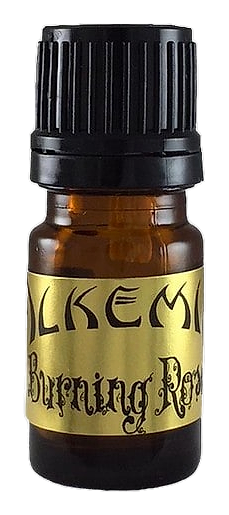
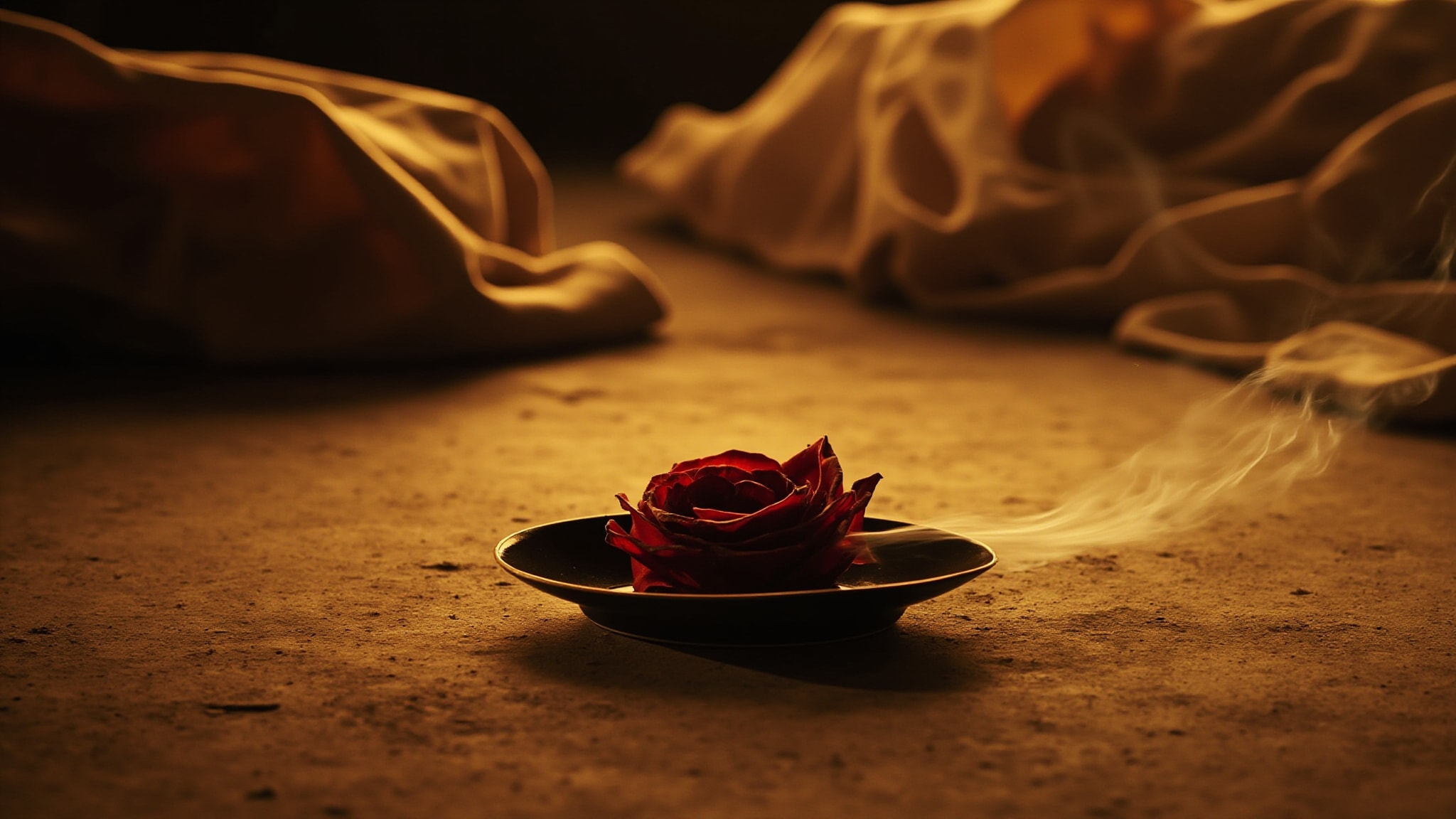
Burning Roses is built around the idea of immolation, the alchemical paradox of burning something beautiful to release something else entirely. Sharra Lamoureaux didn't pair rose with incense as a decorative exercise. She made smoke the point. Dark red roses caught mid-combustion, their petals surrendering their sweetness to the curl and rise of burning botanicals. The result is a fragrance that refuses to stay safely floral, it's incense-forward, smoke-heavy, and unmistakably sensual, the kind of composition that turns a rose into something with edges.
The rose in Burning Roses doesn't behave. It never arrives clean or sweet or polite. Instead, it's a rose caught in its own fire, sweet-tart and dark, its petals already half-consumed by smoke before you catch it. What makes this work is the labdanum. Labdanum is a resin tapped from cistus shrubs, with a warmth that carries depth and complexity. Combined with nag champa and frankincense, it doesn't just support the rose, it transforms what the rose can be. Alkemia's restraint with the note count is itself a statement. Three heart notes. No filler.
The evolution
Burning Roses hits the skin like a lit match. Smoke and resin arrive first, assertive, immediately present. There's a sharp quality to the opening, the kind that suggests actual combustion rather than a composed accord. The rose takes its time. When it arrives, it's not the sweet rose of a spring garden. It's tart and dark and slightly overripe, fighting through the smoke rather than floating above it. The incense never fully retreats. For hours, the two notes exist in uneasy equilibrium, rose and smoke, beauty and char, neither dominating, neither yielding. By the final drydown, the rose is gone entirely. What remains is smoky labdanum, clinging close to skin, warm and lingering. A quiet whisper where the fire used to be.
Cultural impact
Burning Roses has been a quiet staple of the indie fragrance world since 2010, holding its own in a house known for assertive compositions. The combination of dark rose and smoke has become something of a touchstone, a reference point for how contrasting notes can coexist without either losing its essential character.