The Story
Why it exists.
The beginning
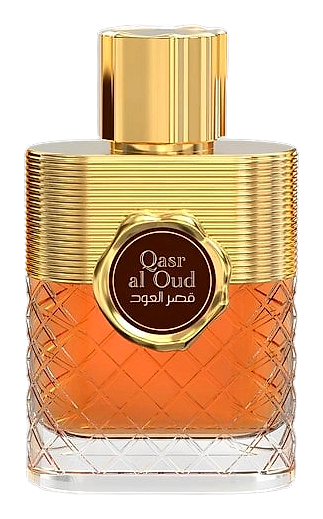
Qasr Al Oud arrived in 2025 from Al Fares, a house rooted in the United Arab Emirates. The name reads as palace and oud, the material that defines so much of Arabic fragrance, and the composition lives up to that promise of grandeur without pulling back. Qasr Al Oud takes its place in a long tradition of resinous, layered compositions, but it doesn't apologize for the excess. Instead, it layers oud under a generous hand of spice and sweetness rather than letting the wood sit austere and alone. The opening pushes bergamot and cinnamon hard, almost before you've settled into the spray, and the nutmeg underneath keeps the warmth buzzing rather than settling flat.
What separates this from a standard amber-oud composition is the praline and tuberose in the heart, two materials that rarely share space. Dates and Mahonial keep the sweetness grounded in something edible and resinous rather than syrupy, while the tuberose adds a creamy, almost indolic floral lift that keeps the sweetness from going flat. The interplay between the candied heart and the smoky resin underneath creates a tension that holds your attention for hours, each note pulling in a slightly different direction without ever collapsing into muddle.
The evolution
The first fifteen minutes are sharp and confident. Bergamot tries to lighten the load, but cinnamon and nutmeg arrive almost immediately, warm and almost peppery, and they don't ask permission. Within thirty minutes the spice settles into something rounder, and the heart takes over: dates and praline give it a sticky, candied depth, while tuberose pushes through with a creamy, slightly dirty floral note that keeps the sweetness honest. By the two-hour mark the amberwood has fully taken the wheel. It's woody, resinous, and unmistakably animalic, the kind of warmth that reads more like heated wood than fruit or sugar. The oud underneath is quiet but structural, and the myrrh and benzoin add a church-incense gravity. As the hours pass, the composition keeps shifting: the candied top notes burn off slowly, leaving the resinous base to deepen and darken.
Cultural impact
Qasr Al Oud draws directly on the materials that define Arabic perfumery: oud at the core, amberwood as a structural anchor, and a heart built around rose, praline, and tuberose that sweetens the wood without softening it. The spice opening of cinnamon, nutmeg, and bergamot is a familiar trio in regional fragrance, and here it sets the tone for a composition that values warmth and richness over restraint. Myrrh and benzoin in the base add the incense weight that's long been associated with Gulf fragrance traditions, while the dates and Mahonial in the heart give the sweetness a local, almost edible character.