The Story
Why it exists.
The beginning
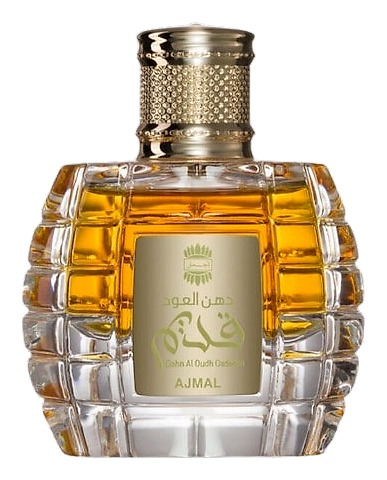
Dahn Oudh Al Shams launched in 2001 as part of Ajmal's Dahn al Oudh line, a collection built around the brand's signature approach to agarwood-heavy compositions. The fragrance sits firmly within the lineage of traditional Arabian perfumery, where the material itself leads and the perfumer's hand stays restrained. Rather than chasing trends or softening the wood for broader appeal, the composition lets agarwood occupy center stage from the first spray to the final drydown. There's no layering of florals to tame the wood's raw character, no sweetness to round out the edges, no modern accords to make it feel contemporary by industry standards. It's released as an Eau de Parfum, a format that suits the concentration and weight of the materials at work.
What makes this composition distinctive is what it leaves out. The accord profile reads animal-woody, earthy, smoky, oriental, with fresh spice cutting through, but the ingredient list shows essentially a single material: agarwood. That restraint is the point. The scent isn't built in the conventional perfumery sense where top, heart, and base notes are carefully orchestrated to create a progression. It's selected. Ajmal chose a high-quality agarwood and let it carry the entire composition without interference. The wood does all the talking, and what it says is uncompromising.
The evolution
The first hour is a slow build, not a burst. The agarwood arrives with a sharp, almost barnyard note, the kind of funky animal warmth that makes people unfamiliar with real oud pull back. Give it time. The wood deepens and broadens, softening into something leathery and resinous, with a dry smokiness that hovers rather than settles. As the composition develops, it shifts from confrontational to meditative. The smoke recedes gradually, making room for the wood's deeper facets to emerge. What remains is warm skin with a faint bitter edge, the scent of wood that's been near fire long enough to absorb it. The leathery quality intensifies during the mid-phase, lending the fragrance a tactile dimension that feels almost like worn leather or aged paper. Close to skin, there's still something left even after a full day, a quiet musk-amber impression that lingers on fabric and carries forward.
Cultural impact
Dahn Oudh Al Shams holds a particular place among collectors of traditional Arabian perfumery. Wearers tend to describe it in terms of loyalty: it's not a casual discovery, it's a commitment. The people who reach for it know what uncut agarwood smells like and prefer it that way. The fragrance carries a weight beyond its scent profile, connecting wearers to a tradition of Arabian perfumery where oud-forward compositions are valued for their honesty and material quality. It sits within a category of fragrances prized by those who seek out concentrated, single-material expressions rather than blended compositions designed for mass appeal.