The Story
Why it exists.
The beginning
Boronia begins with a flower so rare and labor-intensive that its absolute ranks among the most expensive essences in the world. Mandy Aftel built this composition around the Tasmanian boronia blossom, an Australian native whose delicate harvest window and modest yield give it a near-mythic status among natural materials. The boronia here is not hidden behind a complex accord or masked by louder florals. It is the entire point. Aftel's approach honors the flower's own complexity rather than adding to it, letting raspberry-like fruitiness, apricot sweetness, and a violet-edged softness arrive on their own terms. There is something almost vertiginous about smelling a single botanical specimen presented with such clarity.
What makes boronia extraordinary is its impossible range. One absolute carries fruit, flower, green stem, and a faintly candy-like sweetness all at once. Aftel pairs it with orange blossom and orchid, two florals chosen for their ability to coexist with the boronia's natural complexity. The result is something that doesn't behave like a typical blend. It has a green pulse and an almost edible warmth that reads more like sun-warmed skin than a traditional bouquet.
The evolution
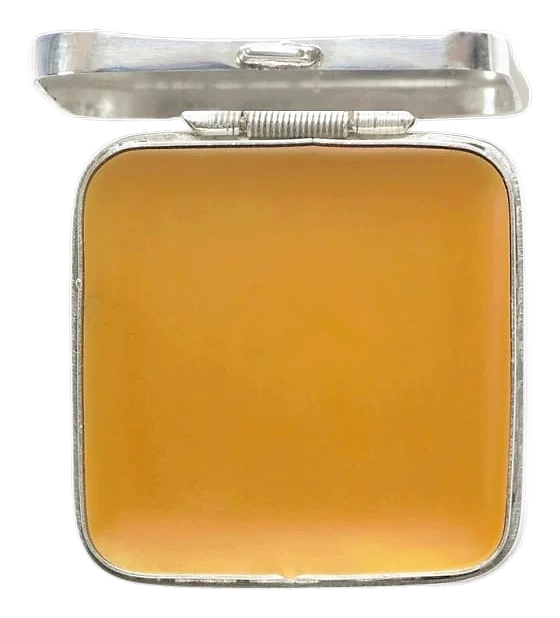
On application, boronia arrives bright and almost confectionary, that raspberry-and-apricot fruitiness hitting first. Within moments, the orchid deepens the texture, pulling the scent from airy to creamy. The green and fruity accords settle into the middle phase, where boronia's complexity starts to unfold: the freesia-adjacent sweetness emerges, and that almost-musky warmth builds gradually, hinting at skin rather than perfume. Over time, what remains is a soft, lingering presence of orange blossom woven together with the fading memory of the boronia's fruitiness. The solid format keeps things close to the body, creating a quiet but persistent scent experience that rewards repeated checking rather than announcing itself across a room. As the hours pass, the composition shifts in subtle ways, the brighter fruit notes gradually giving way to warmer, more skin-like tones.
Cultural impact
Boronia belongs to a small category of fragrances built around a single, obscenely expensive natural material. It attracts the kind of wearer who cares more about what a scent is made of than what it costs. In a world full of compositions chasing mass appeal, a boronia-centric fragrance makes a different kind of statement, one rooted in botanical authenticity rather than trend-driven design. The flower itself carries centuries of meaning in its native Australia, where early settlers prized it for its fragrance long before it entered modern perfumery.