
The Story
Why it exists.
The beginning
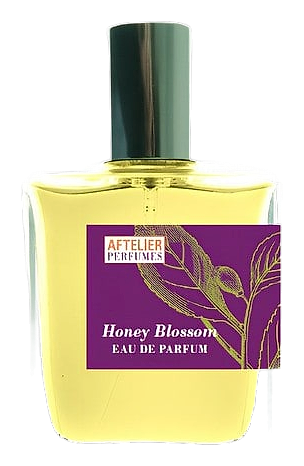
Honey Blossom emerged from a correspondence between Mandy Aftel and Andy Tauer, a creative exchange where both perfumers approached linden blossom CO2 from opposite directions. Aftel's interpretation became Honey Blossom, a pristine liaison of buoyant linden blossom, mimosa, and orange blossom swirling around a translucent honey theme. The name says exactly what it is: honey distilled into blossom, not the other way around. This is a soliflore in the truest sense, one idea, one memory, held up to the light until it catches.
What makes this soliflore unusual is how faithfully it translates the ephemeral quality of honeysuckle on the vine into wearable form. Most fragrances claim a flower; Honey Blossom argues for a feeling, the golden, syrupy warmth of nectar rather than the flower's structure. The ambergris base isn't an afterthought but a counterweight, adding salt and animalic depth that prevents the composition from becoming merely sweet. The result is something that smells less composed than discovered.
The evolution
The opening arrives bright and airy, linden blossom and mimosa lifting together like pollen caught in morning light. For the first thirty minutes, the honeyed character stays translucent, more suggestion than statement. The transition to heart reveals orange blossom's warmer white floral quality, deepening the sweetness without tipping into syrup. By hour two, ambergris and benzoin take over, the benzoin adding its characteristic vanilla-balsamic warmth, the ambergris providing its salty, almost marine undertone that distinguishes this from any conventional floral. As the flowers fade, ambergris and benzoin remain close to the skin, their warm, slightly animalic character lingering in an intimate drydown that feels entirely personal.
Cultural impact
Honey Blossom belongs to Aftelier's Soliflore collection, fragrances built around a single botanical memory rather than a constructed pyramid. It's the kind of fragrance that invites contemplation rather than compliments. The natural materials give it a transparency that mass-market florals can't replicate, creating an understated elegance that resonates deeply with those who discover it. This quiet sophistication is precisely why it inspires such devotion among its admirers.