The Story
Why it exists.
The beginning
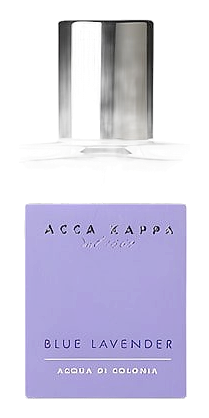
Blue Lavender emerged from a house that treats restraint as a discipline. Lavender, for Acca Kappa, isn't nostalgia. It's a fresh start. The familiar herb that has anchored countless fougeres and masculine colognes finds itself recontextualized here, stripped of its expected associations and given room to breathe differently. Frankincense entered the composition as the counterweight. Not to modernize lavender, but to complicate it. Pink pepper and rosemary were added like punctuation marks in a sentence that refuses to end with a period. This was lavender as idea, not ingredient.
What makes Blue Lavender structurally interesting is what it leaves out. No auxiliary florals clutter the heart, no citrus top notes brighten the arrival, no gourmand elements lurk in the drydown. The composition reads more like an architectural sketch than a finished painting, each element placed with intention and purpose. The frankincense placement is the subtlest decision in the work. It arrives quietly and settles into the background, becoming atmospheric rather than dominant.
The evolution
The opening hits with more force than the name suggests. Rosemary and pink pepper arrive sharp, almost confrontational, the kind of aromatic intensity that demands you pay attention. The frankincense is present but doesn't overwhelm; it's atmospheric, like entering a room where incense has been burning for an hour. The heart belongs entirely to the lavender. After twenty minutes, the herbal top notes settle and the Provençal lavender asserts itself, clean, intense, almost metallic in its clarity. The violet adds a powdery softness that prevents harshness while the French lavender brings a slightly more rounded, herbaceous quality that enriches the single-note impression one might expect. The composition tightens, becomes more precise. The drydown is where Blue Lavender becomes itself.
Cultural impact
Blue Lavender occupies a specific corner of the aromatic-fougere landscape. It's a fragrance for people who appreciate the lavender-fougere tradition but want something less performative, more conversation. The audience it attracts tends to appreciate a different approach to aromatic composition, finding value in subtlety and nuance rather than bold statement. This isn't a fragrance for everyone, it was never trying to be. Its positioning as a more considered alternative speaks to a certain type of fragrance wearer, one who prioritizes personal satisfaction over universal appeal.