
The Story
Why it exists.
The beginning
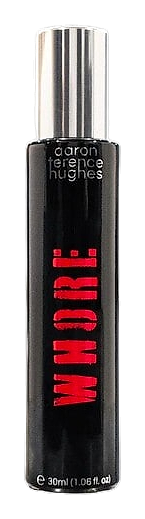
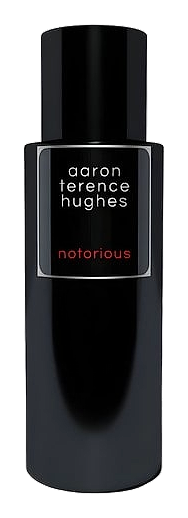
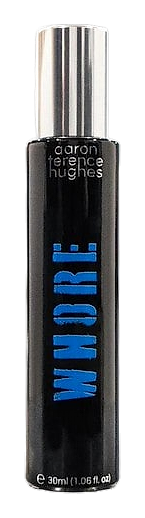
Aaron Terence Hughes named this one deliberately. No ambiguity, no coy. Whore Blue is a provocation dressed as a question: what happens when clean stops being enough? The answer lives in the bottle. A British independent perfumer building his catalog around personal expression rather than market timing, Hughes has made a career out of compositions that ask something of the wearer. This one asks you to stay.
The note structure here is unusually honest. Three bright top notes, bergamot, elemi resin, nutmeg, arrive together and immediately start arguing about who gets to lead. The bergamot doesn't win outright. The nutmeg doesn't back down. Elemi resin sits between them like a mediator with a bad habit. Meanwhile, the tobacco heart waits. Patient. By the time the vanilla and benzoin arrive in the base, the opening notes have exhausted themselves and the real conversation begins.
The evolution
The opening is a cold splash. Bergamot leads, sharp and immediate, with elemi resin and nutmeg threading through like heat under glass. It reads clean for the first fifteen minutes, the kind of clean that makes you check if you showered. Then the tobacco arrives. Not smoky. Not harsh. More like the smell of a room someone just left, warm and intimate. The vanilla follows, but it doesn't overwhelm. It sweetens the edges of the tobacco without drowning it. By hour three, the benzoin and tonka bean have settled into something close to skin, warm, slightly powdery, with vetiver and patchouli providing the counterweight that keeps it from going full gourmand. White musk keeps the whole thing close. The sillage shifts from strong to intimate over eight to ten hours, becoming something the wearer notices more than the room. On dry skin, the tobacco heart can pull ahead early, making the drydown feel premature. On normal skin, it holds its arc. The next morning, there's a faint trace of benzoin and vanilla on fabric, the ghost of last night.
Cultural impact
Whore Blue occupies a specific corner of the niche market, fragrances that use provocative naming as a filter. The kind of wearer who chooses this isn't looking for universal approval. They're looking for a scent that matches a specific mood, a specific moment, a specific version of themselves. In that sense, it aligns with the broader movement in independent perfumery toward fragrance as identity marker rather than social signal.